Voyage dans la Basse et la Haute-Egypte
|
||||||||||||||||||||
|---|---|---|---|---|---|---|---|---|---|---|---|---|---|---|---|---|---|---|---|---|

|
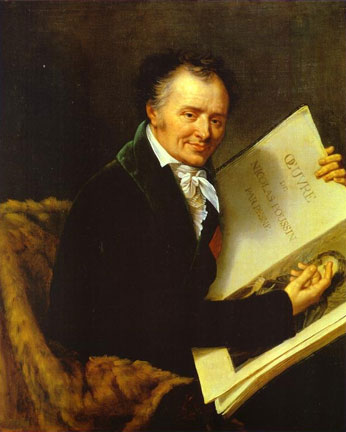
Dominique Vivant Denon |
The first member of the French National Institute to visit Upper Egypt and report his discoveries was Denon, who had independently joined Generals Louis Desaix and Auguste Belliard in the pursuit of the Mamelukes. During the course of the arduous campaign, he made over 200 drawings of panoramic scenes and monuments. The artist attempted to give various sites a place in the chronological development of art history based on his judgment of the aesthetic merit of each. Though zealous, Denon and his associates made some egregious errors. The monuments, which they found most impressive and therefore concluded must be quite ancient, like the temple at Dendera, actually dated from the Greco-Roman era. The scholars' inability to read hieroglyphic writing hampered their historical conclusions. Ironically, discovery of the famous Rosetta Stone, which would later hold the key to the ancient language, was completely serendipitous. A military engineer working on fortifications in El-Rashid (Rosetta) in the Delta found the stele, and the scholars immediately grasped its significance. They took it to the Institute, made numerous copies, and began to translate the Greek portion of the inscription. At the end of the occupation, the British, too, recognized the artifact's value, and claimed it in the official negotiations for French withdrawal. |
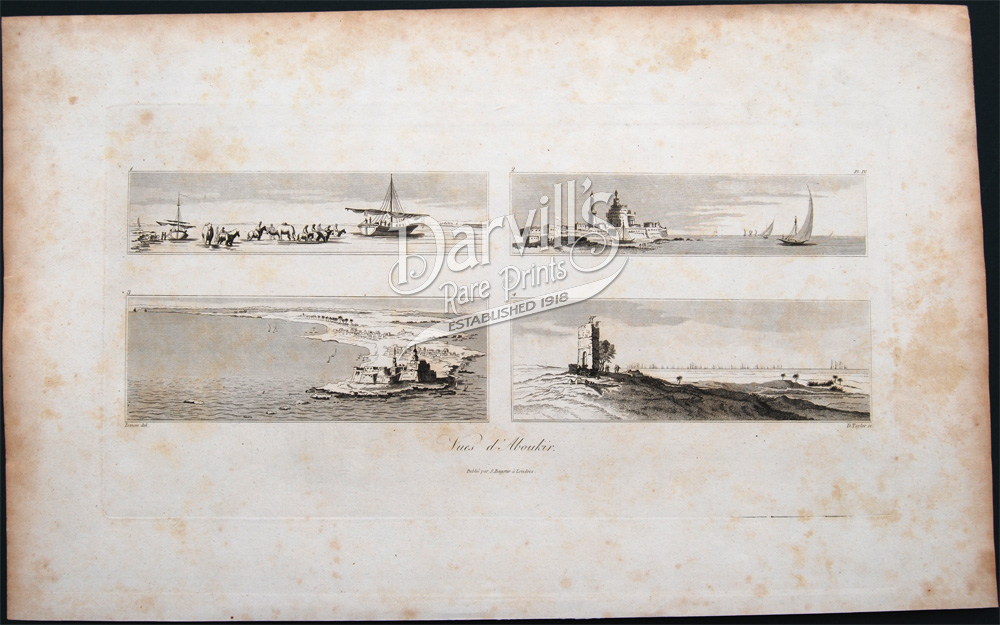 |
PLATE IV |
Vues d'Aboukir |
$125 |
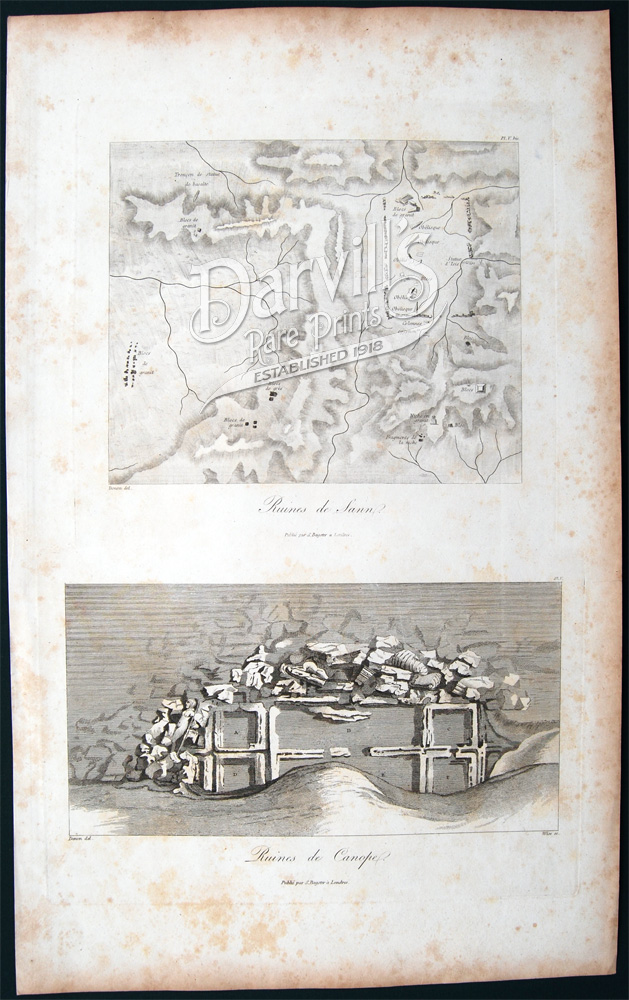 |
PLATE V |
Ruines de Sann, Ruines de Canope |
$75 |
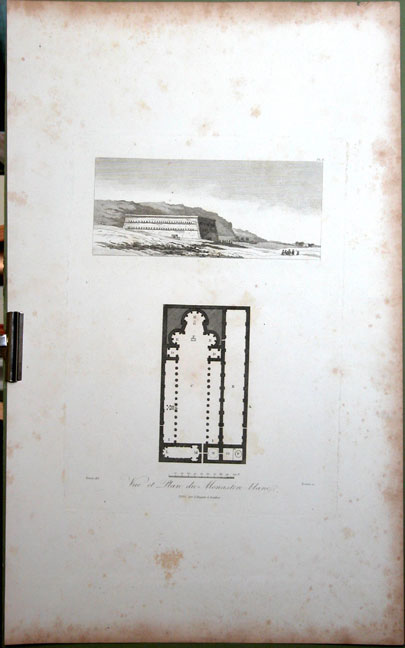
PLATE X |
Vue et Plan du Monastere blanc |
$95 |
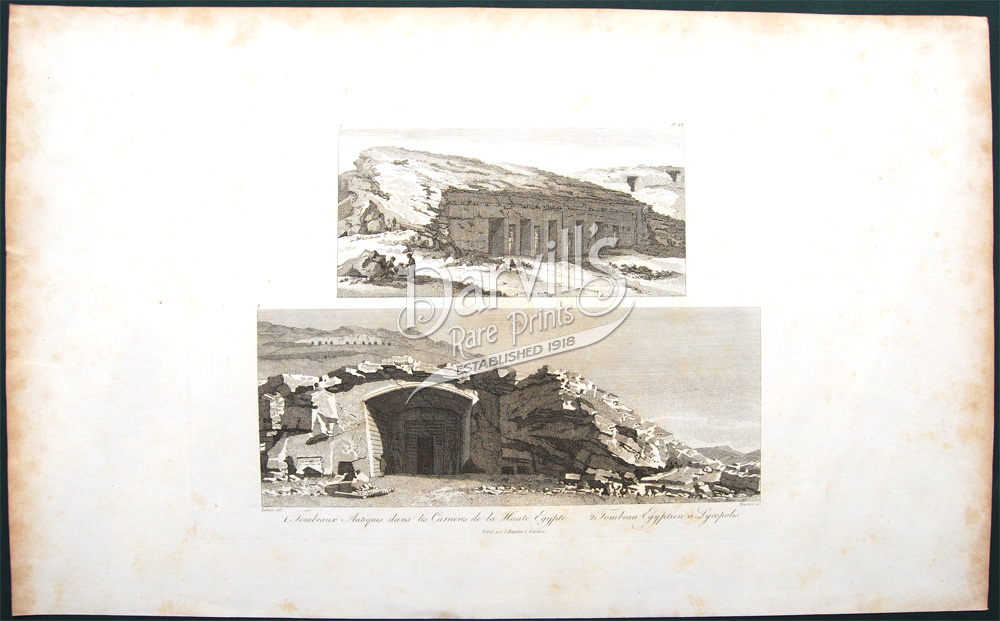 |
PLATE XII |
Tombeaux Antiques dans les Carrieres de la Haute Egypte, Tombeau Egyptian à Lycopolis |
$95 |
 |
PLATE XIII |
Vues et Temples de Tentyris |

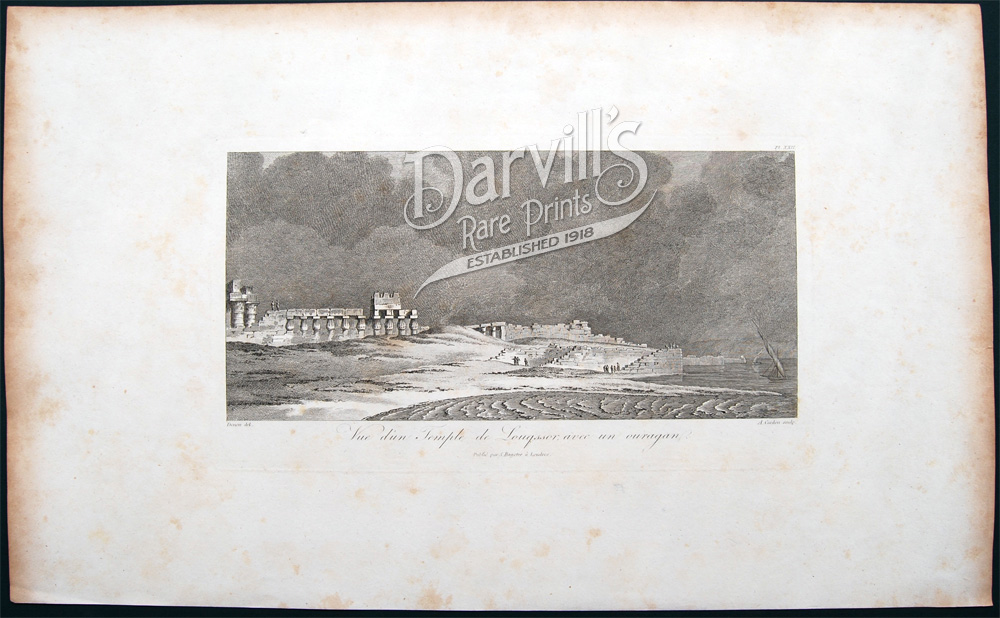 |
PLATE XXII |
Vue d'un Temple du Louqssor, avec un ouragan |
$150 |
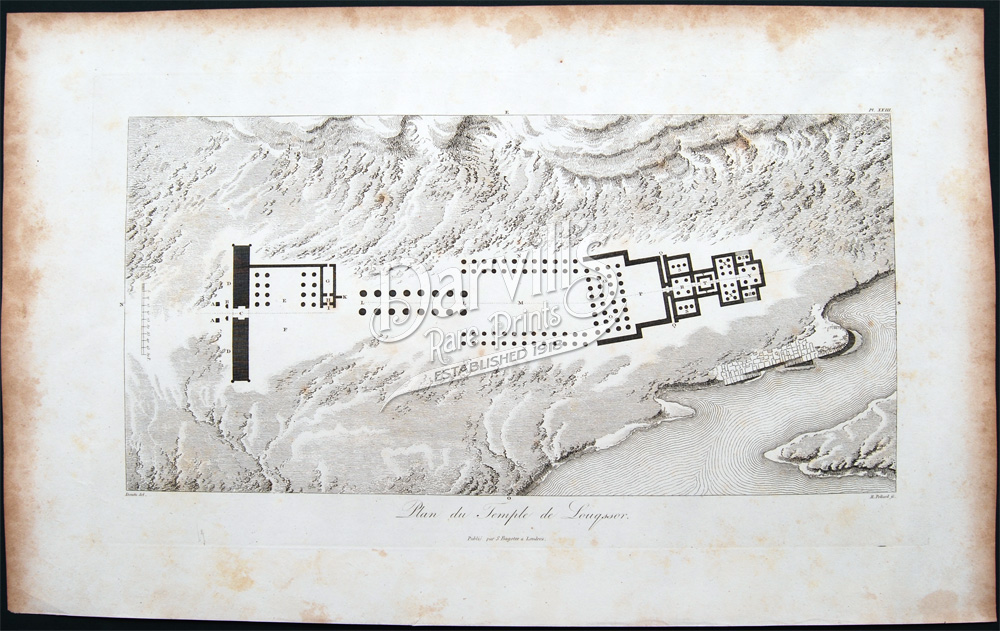 |
PLATE XXIII |
Plan du Temple de Louqssor |
$150 |
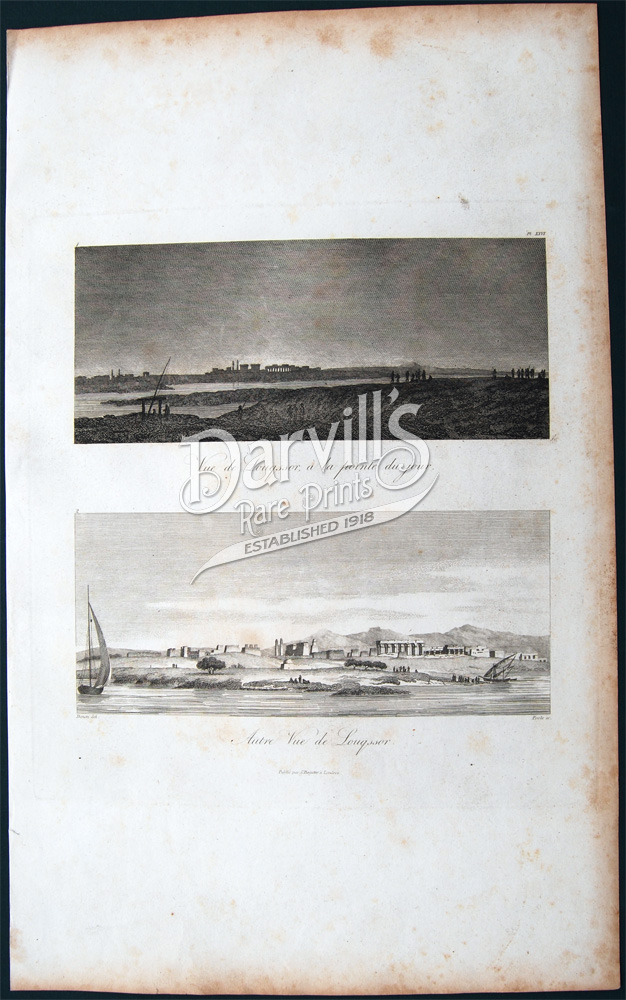 |
PLATE XXVI |
Vue de Louqssor, a la point du jour,
|
$125 |
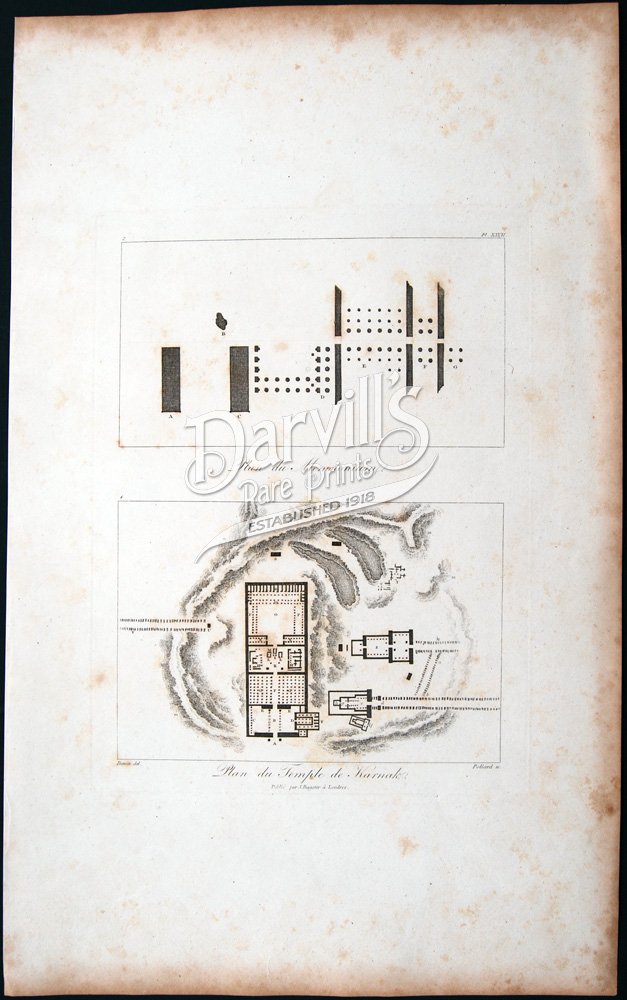 |
PLATE XXVII |
Plan du Memnonium,
|
$85 |
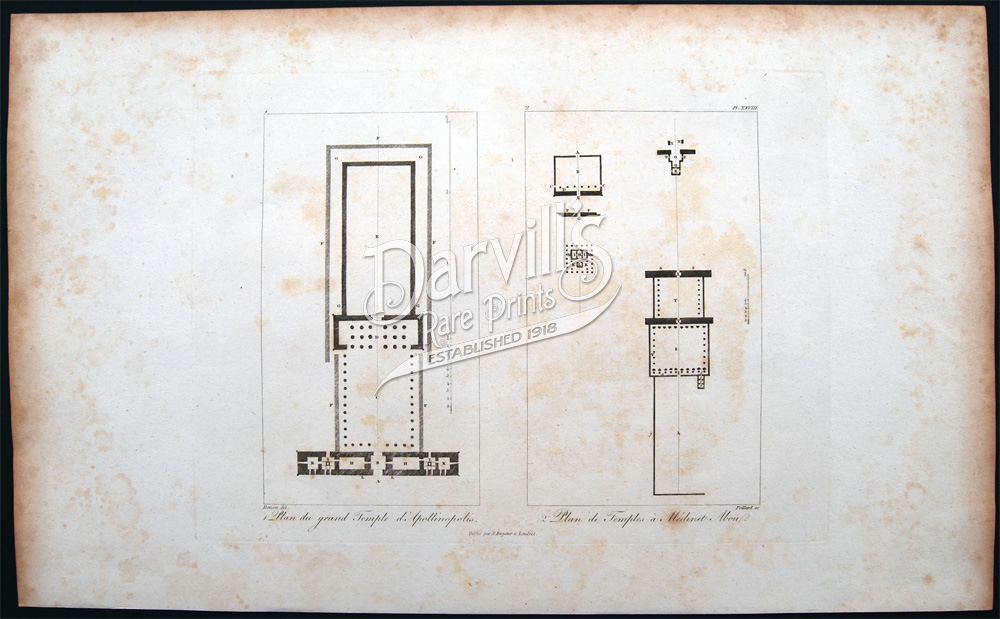 |
PLATE XXVIII |
Plan du grand Temple d'Apollinopolis,
|
$75 |
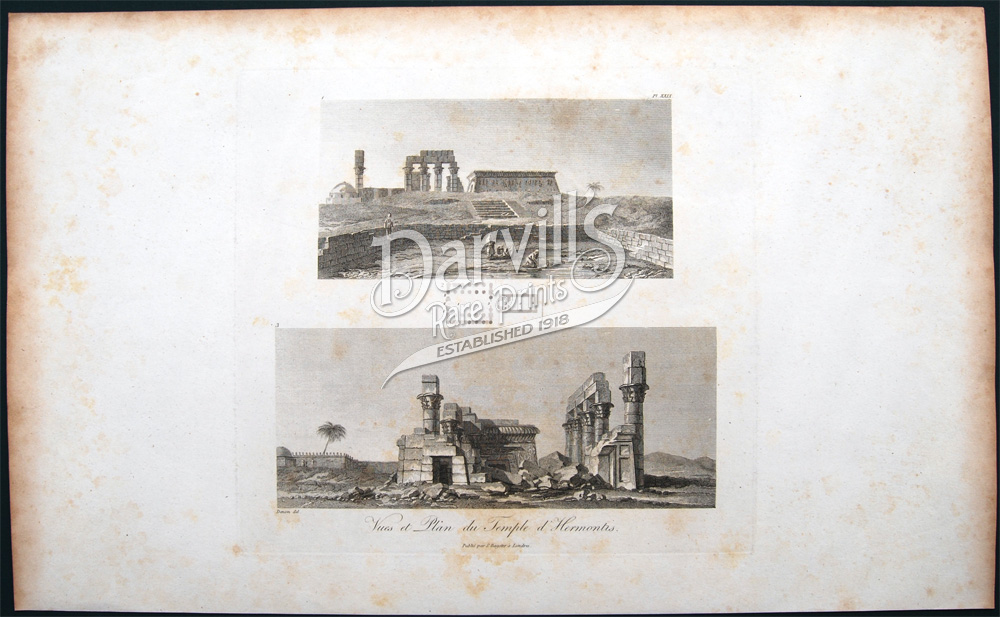 |
PLATE XXIX |
Vues et Plan du Temple d'Hermontis |
$125 |
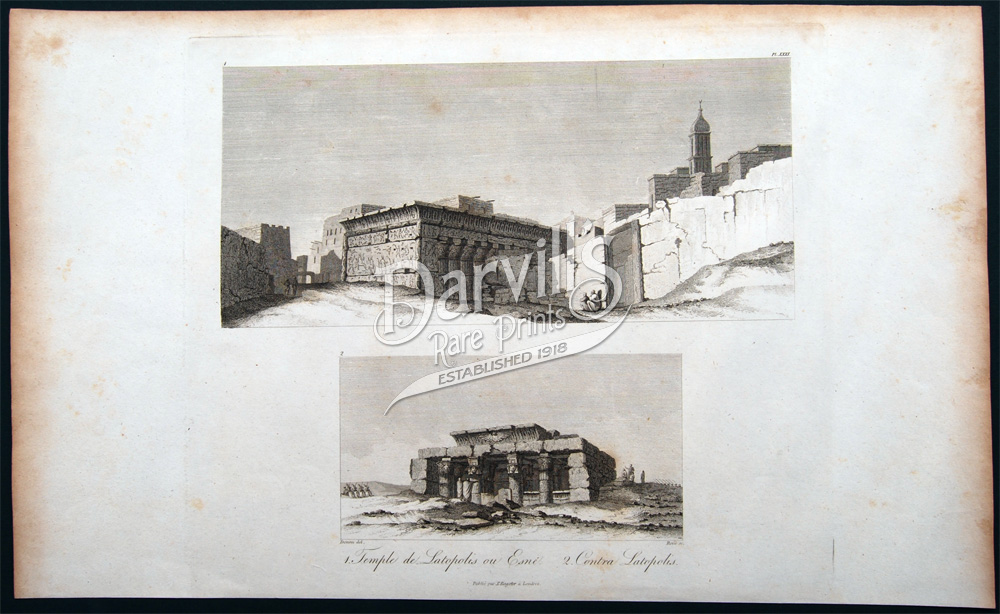 |
PLATE XXXI |
Temple de Latopolis ou Esne, Contra Latopolis |
$125 |
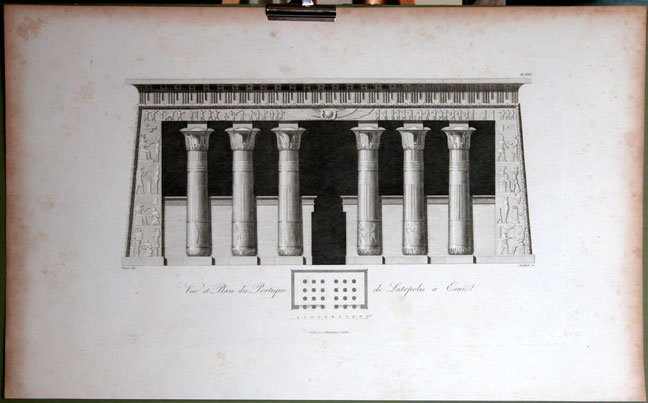
PLATE XXXII |
$125 |
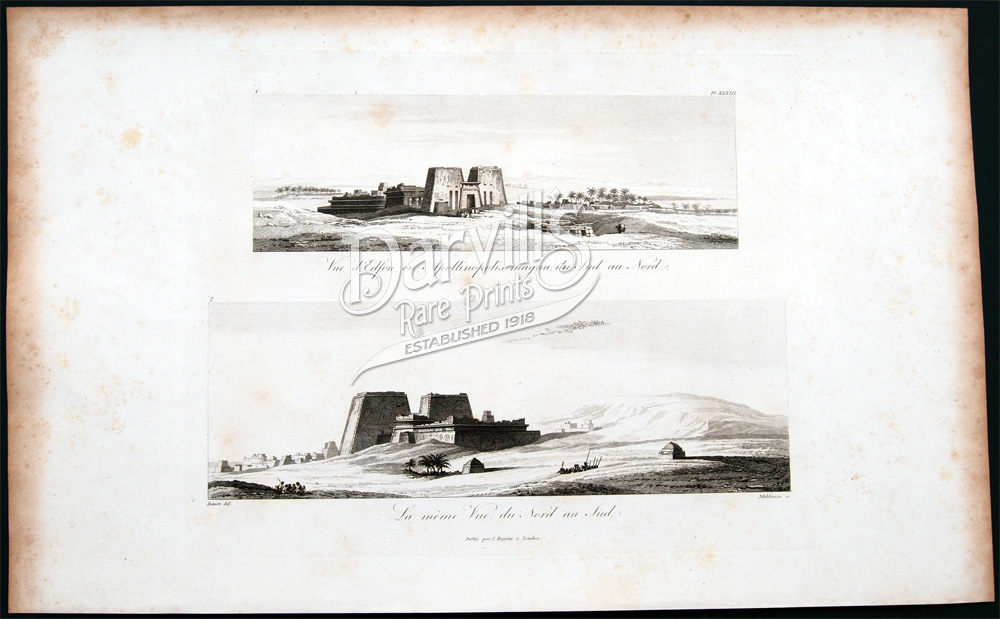 |
PLATE XXXIII |
Vue d'Edfou ou Apollinopolis magna du Sud au Nord, La même Vue, du Nord au Sud |
$125 |
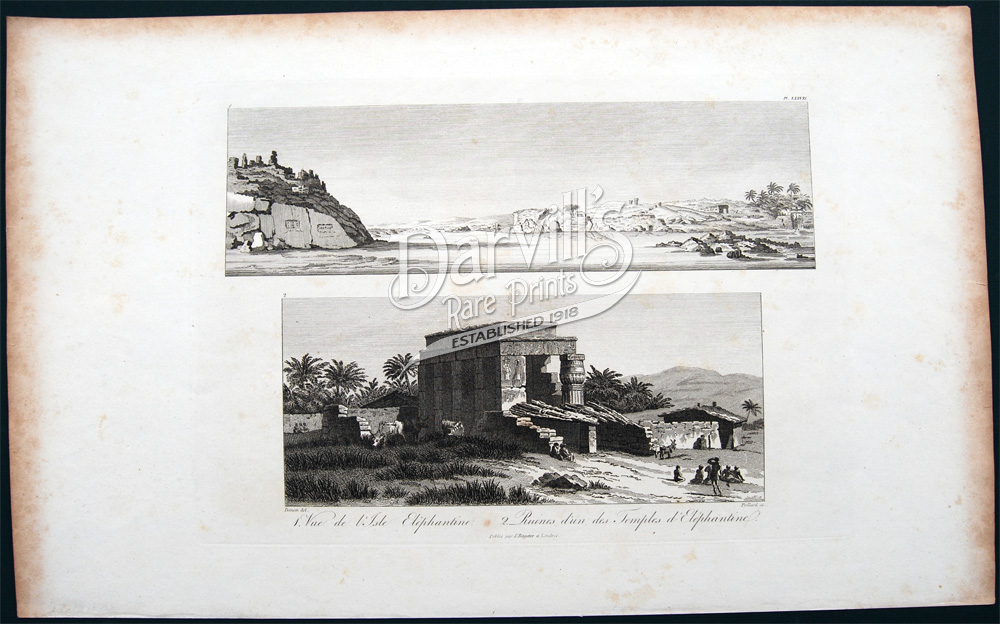 |
PLATE XXXVII |
Vue de l'Isle Eléphantine, Ruines d'un des Temples d'Eléphantine |
$125 |
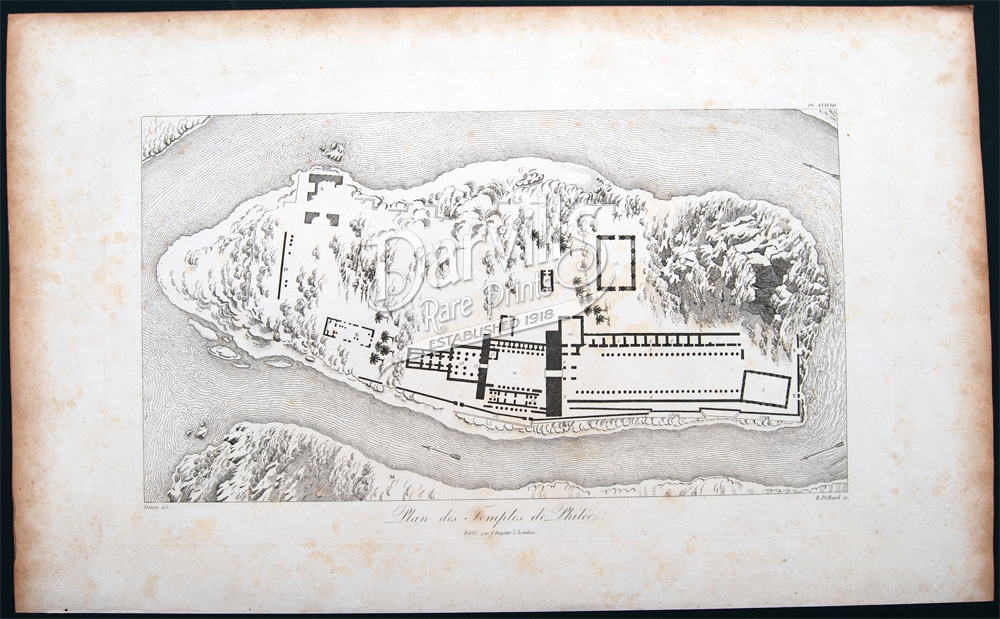 |
PLATE XXXVIII |
Plan des Temple de Philée |
$95 |
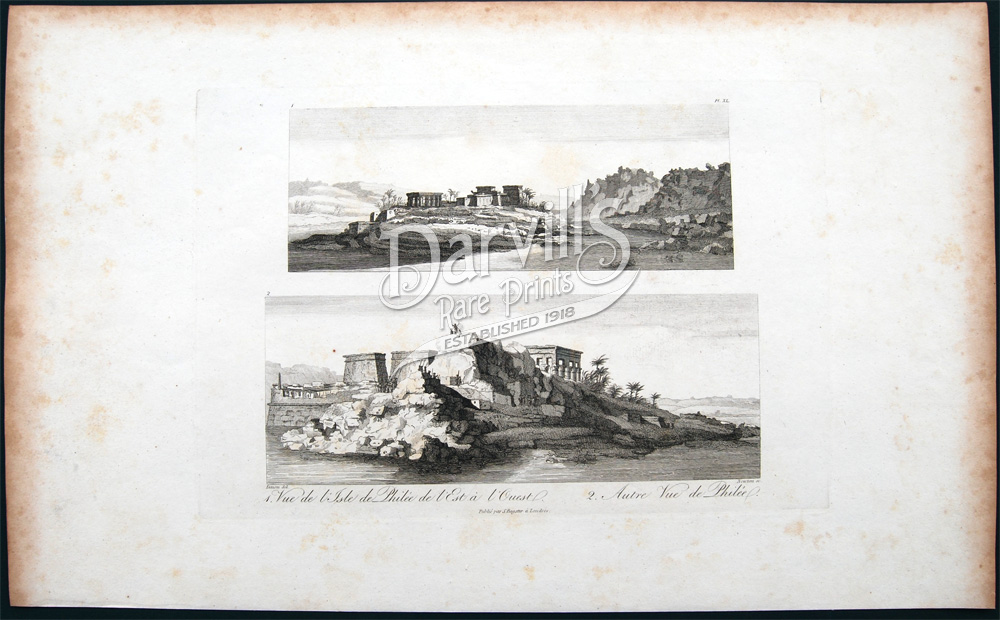 |
PLATE XL |
Vue de l'Isle de Philée de l'Est a l'Ouest, Autre Vue de Philée |
$125 |
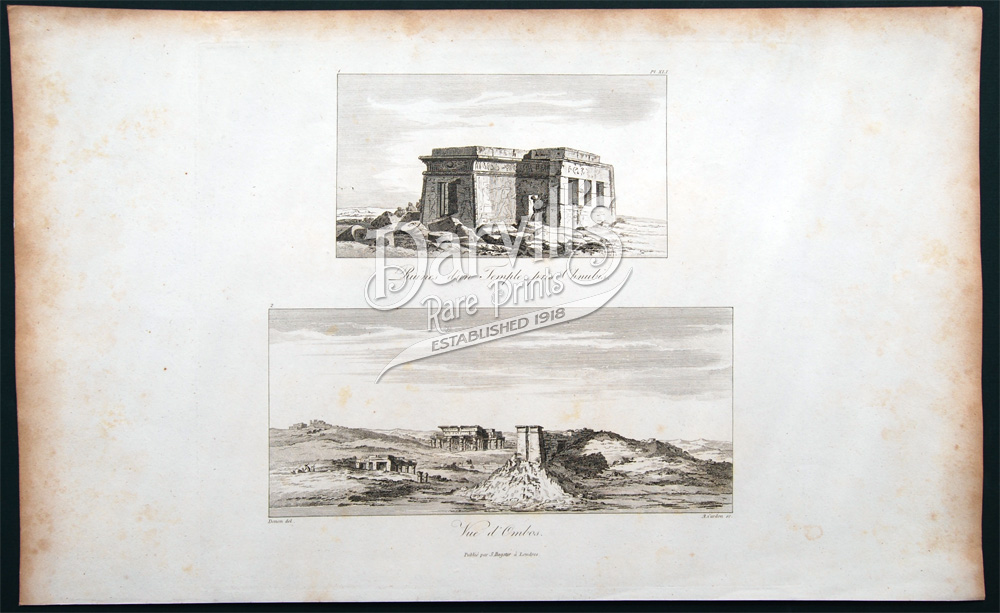 |
PLATE XLI |
Ruines d'un Temple près Chnubis,
|
$125 |
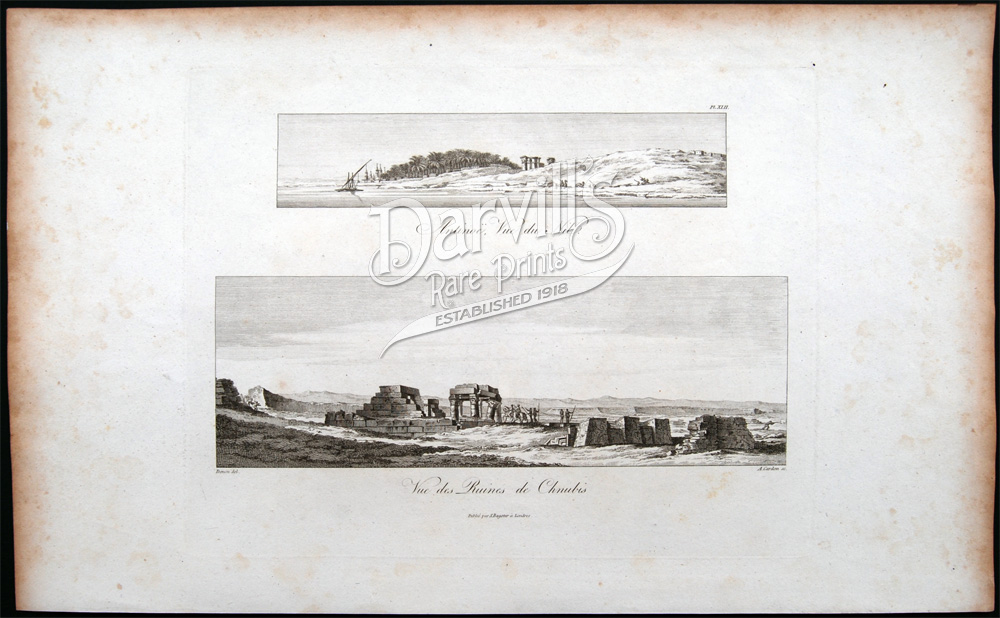 |
PLATE XLII |
Antinoë, Vue du Nil,
|
$150 |
 |
PLATE XLVII |
$100 |
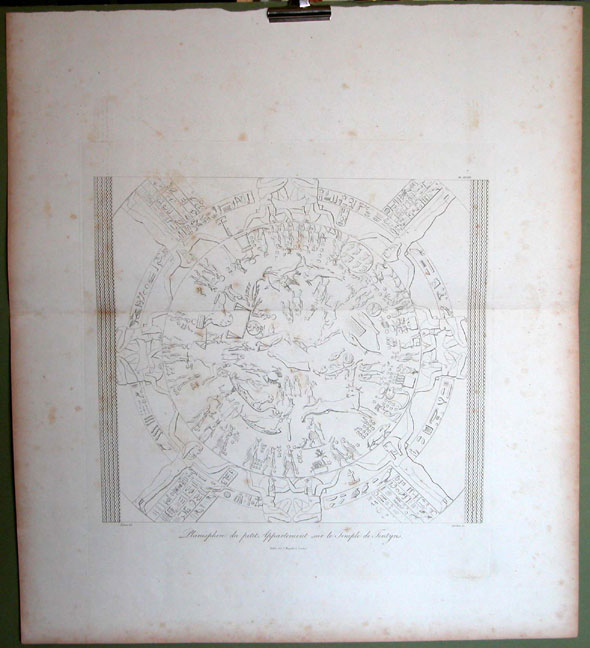 |
PLATE XLVIII |
Planisphere de petite Appartement sur le Temple de Tentyris |
$125 |
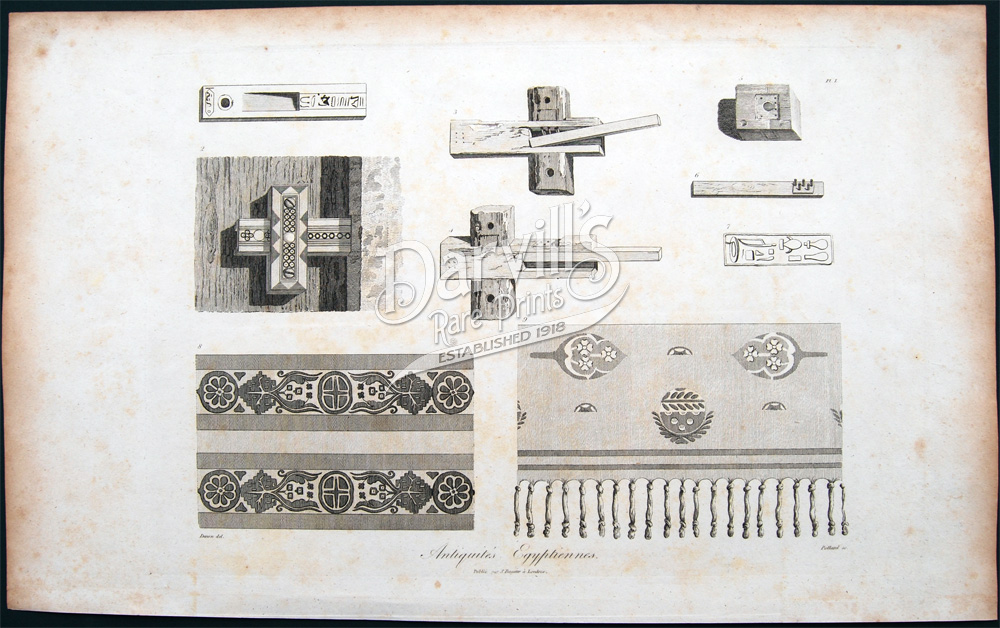 |
PLATE L |
Antiquités Egyptiennes |
$85 |
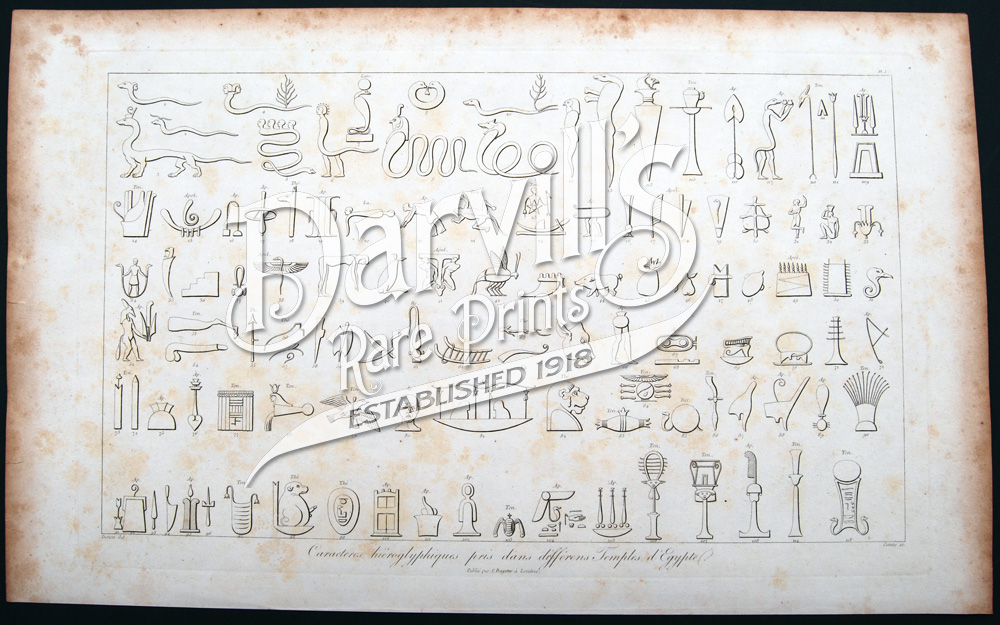 |
PLATE LII |
Caracteres hiérophyphiques pris dans différens Temples d'Egypte |
$85 |
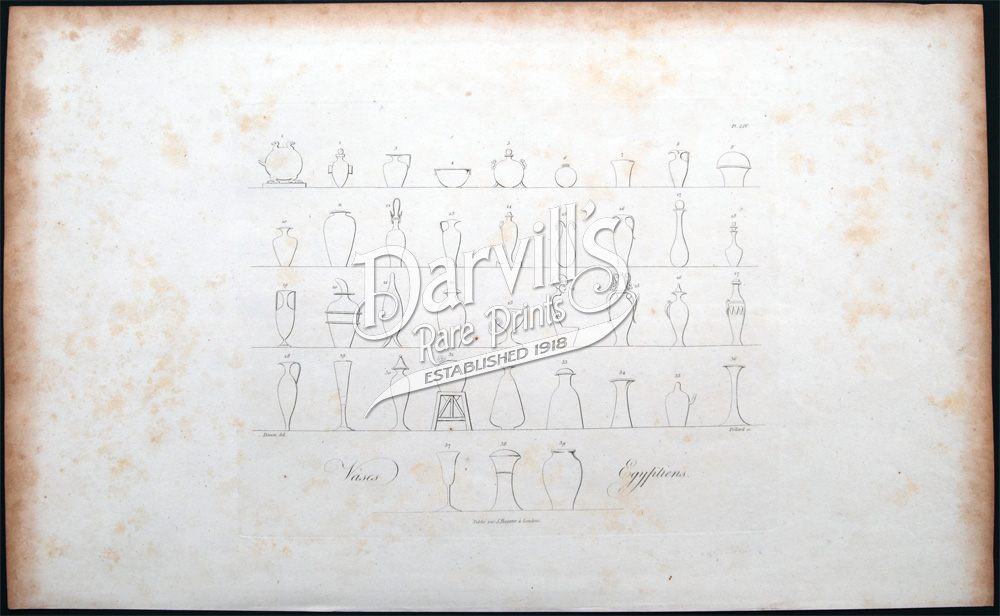 |
PLATE LIV |
Vases Egyptiens |
$65 |
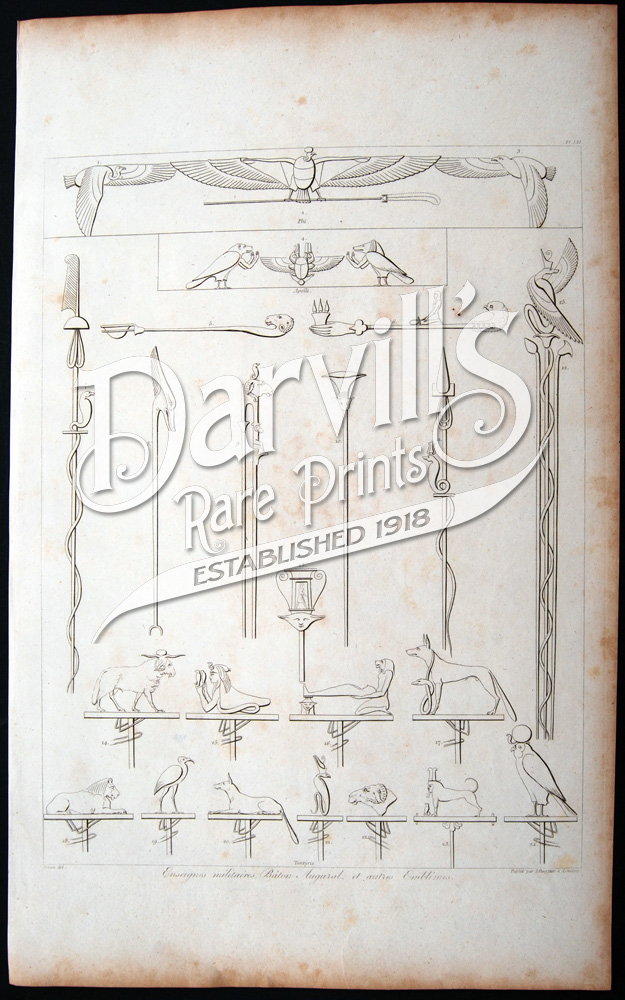 |
PLATE LXI |
Enseignes militaires Bâton Augural et autres Emblêmes |
$85 |
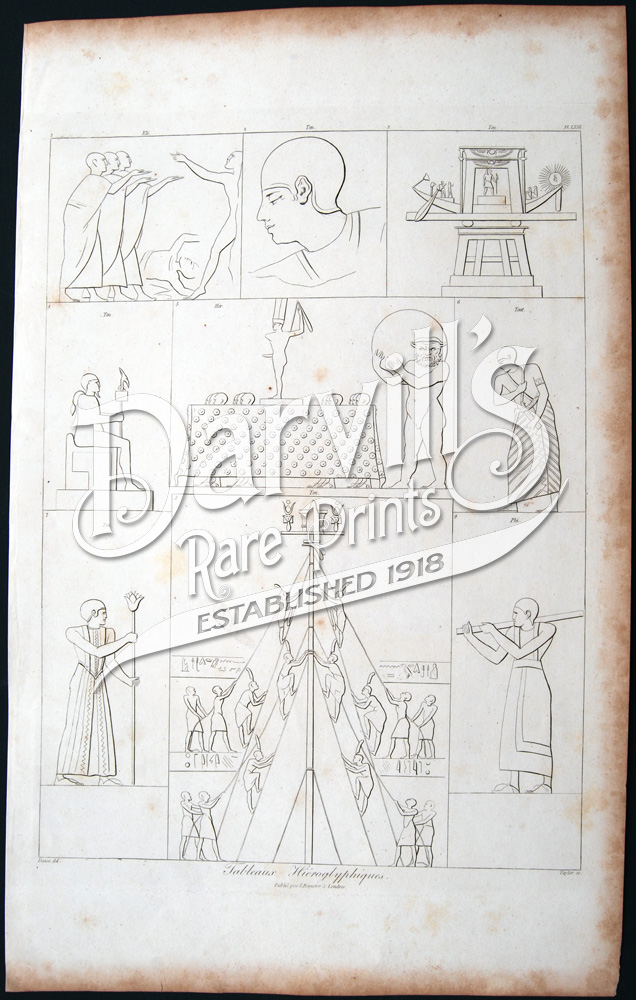 |
PLATE LXIII |
Tableaux Hieroglyphiques |
$85 |
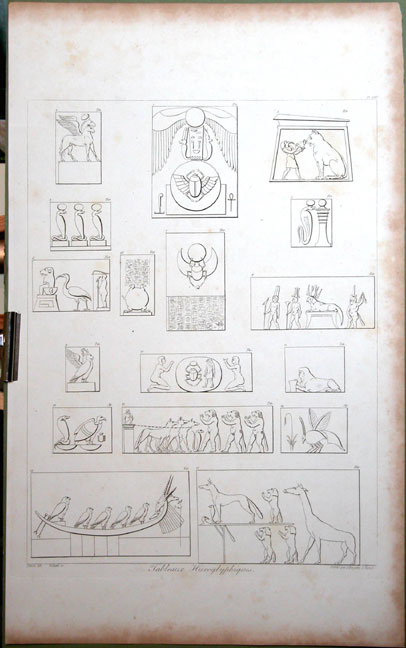 |
PLATE LXIV |
Tableaux Hieroglyphiques |
$85 |
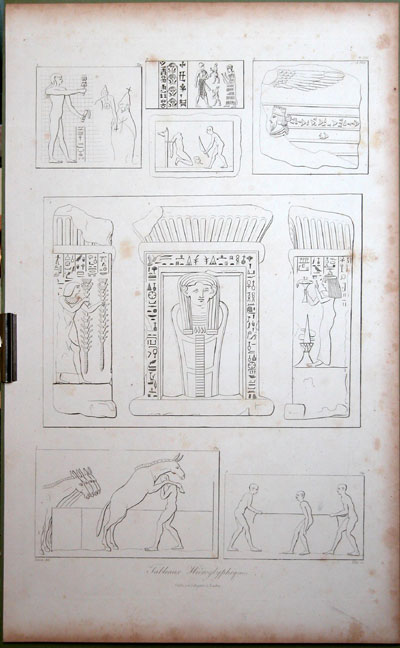
PLATE LXVI |
Tableaux Hieroglyphiques |
$85 |
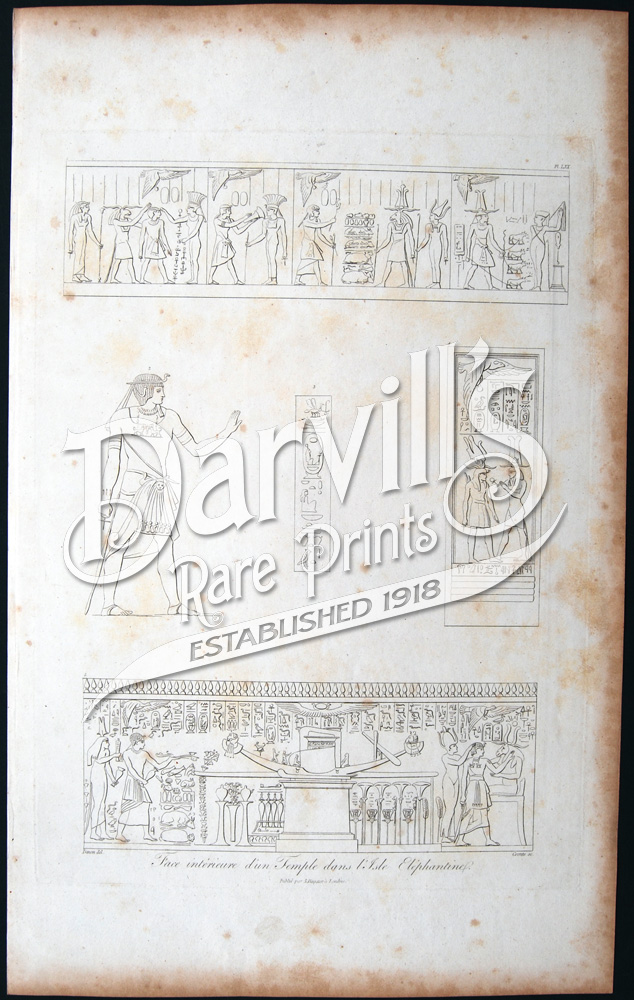 |
PLATE LXX |
Face intérieur d'un Temple dans l'Isle Eléphantine |
$85 |
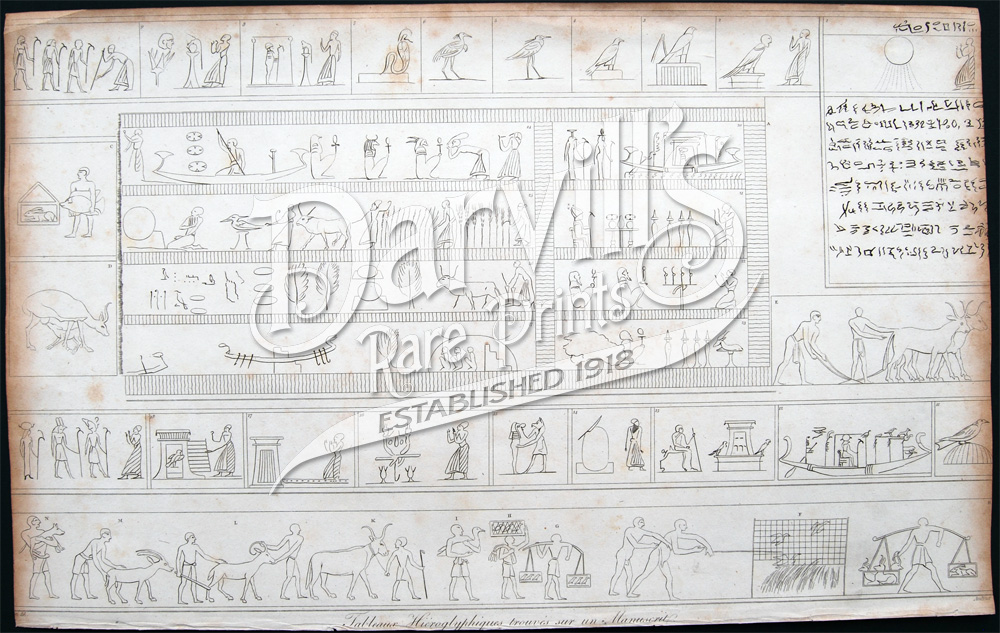 |
PLATE LXX? |
[Egyptian Hieroglyphics] |
$115 |
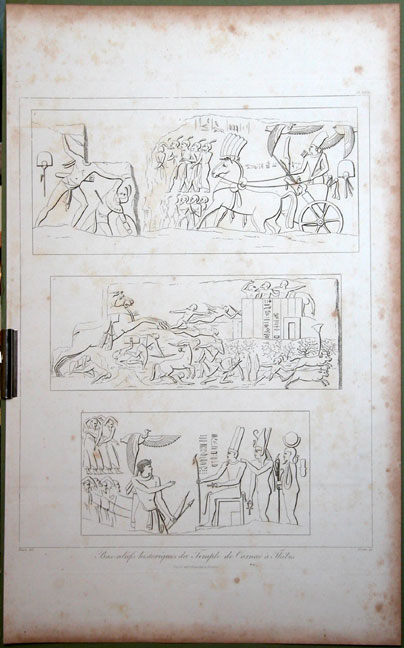 |
PLATE LXXIII |
Bas-relief historiques du
|
$85 |
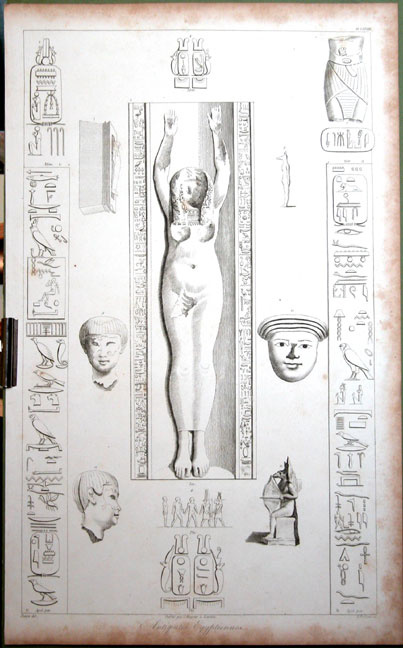 |
PLATE LXXIII |
Antiquities Egyptiennes |
$85 |
![[Egyptian costumes]](images/images/Denon Egypt/2/costumes.jpg) |
PLATE LXXXVI |
[Egyptian costumes] |
$85 |
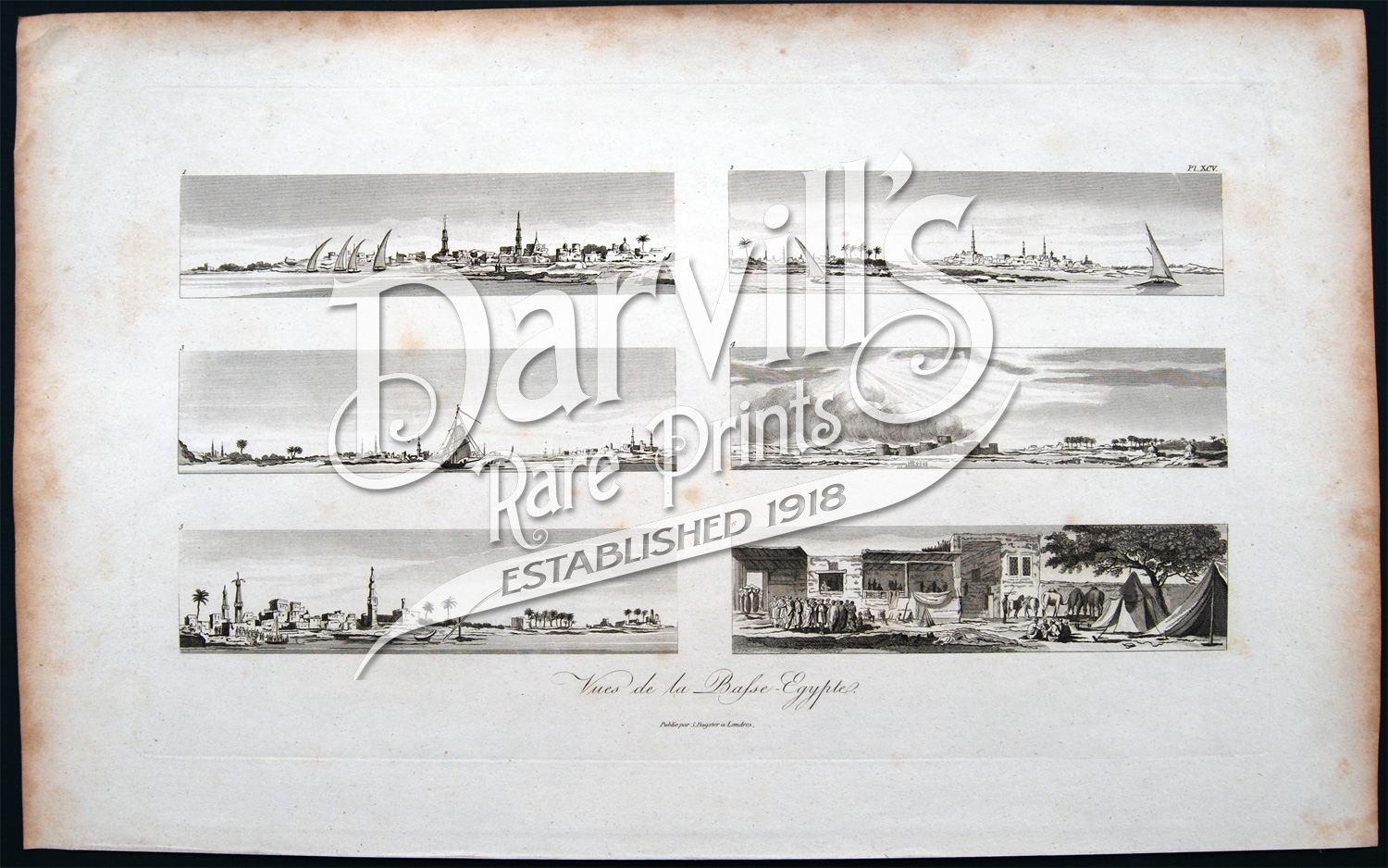 |
PLATE XCV |
Vues de la Basse-Egypte |
$175 |
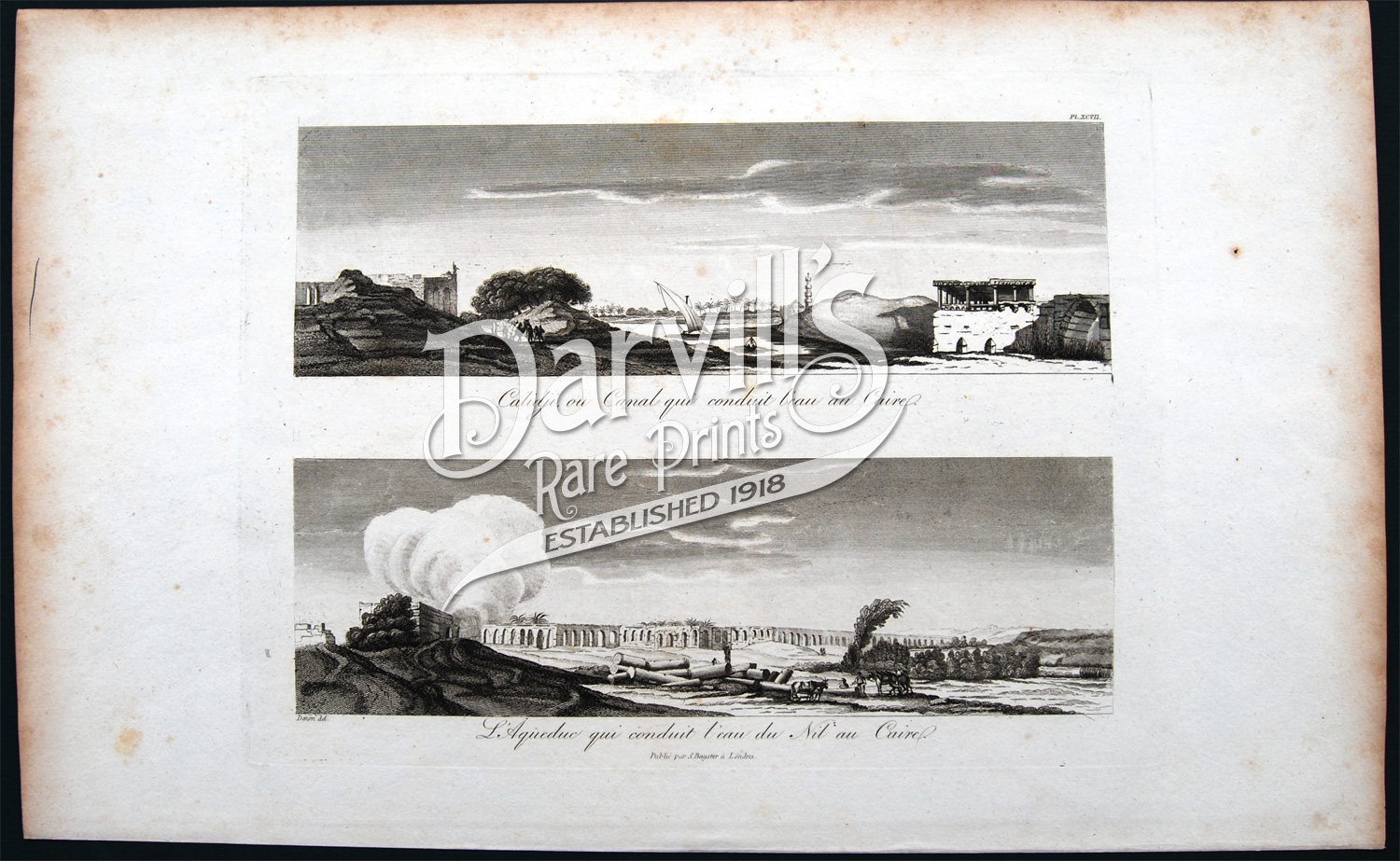 |
PLATE XCVII |
Calidji, ou Canal qui conduit l'eau au Caire
|
$175 |
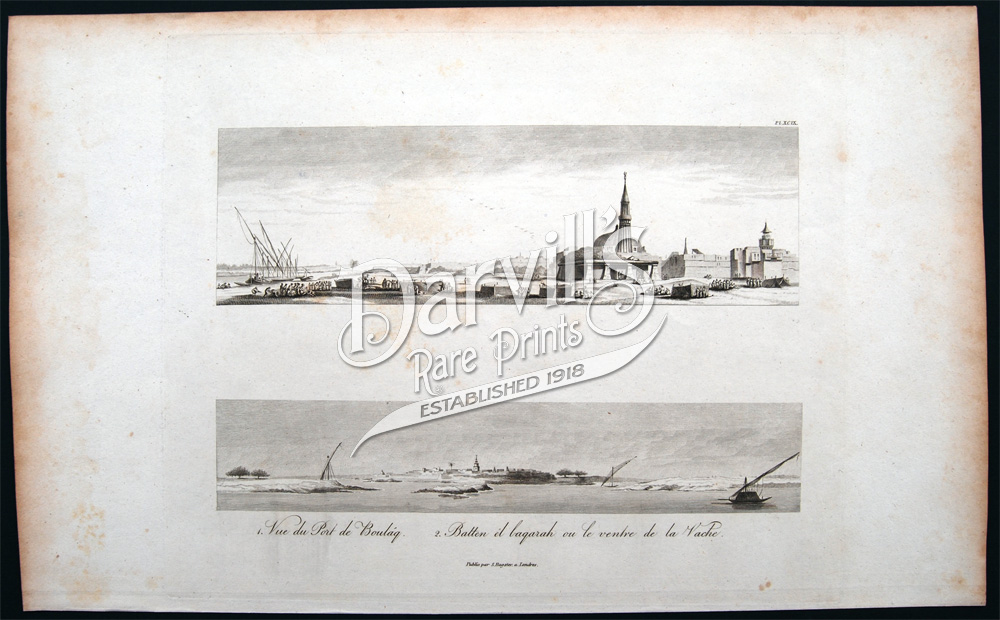 |
PLATE XCIX |
Vue du Port de Boulâq,
|
$150 |
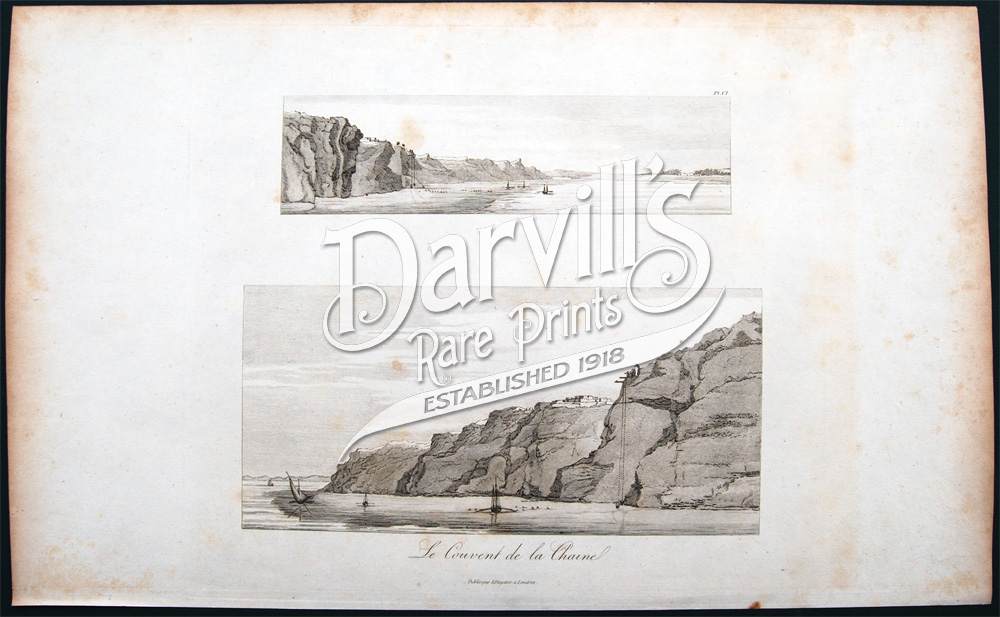 |
PLATE CI |
Le Couvent de la Chaine |
$100 |
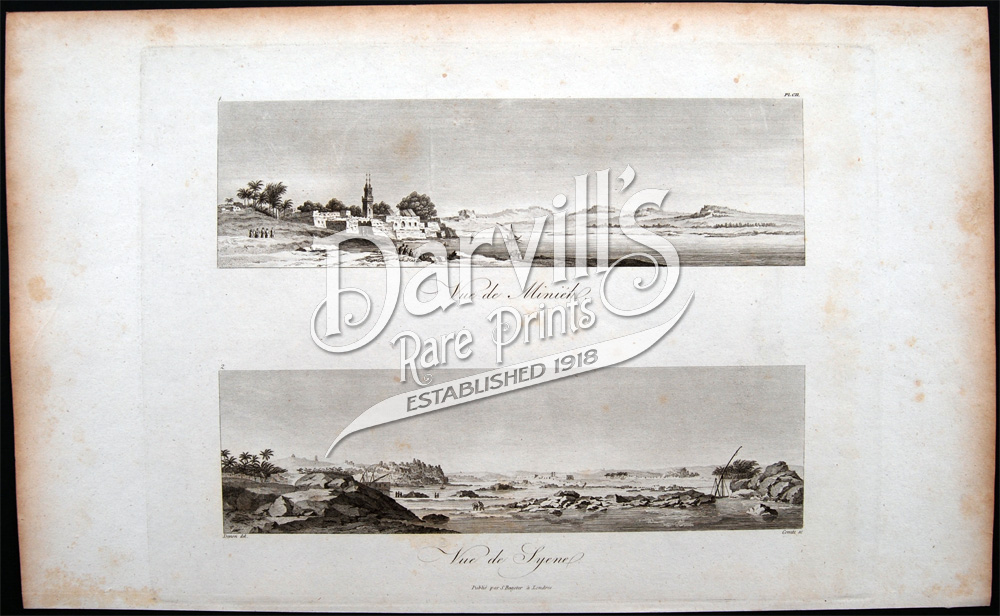 |
PLATE CII |
Vue de Miniéh, Vue de Syene |
$150 |
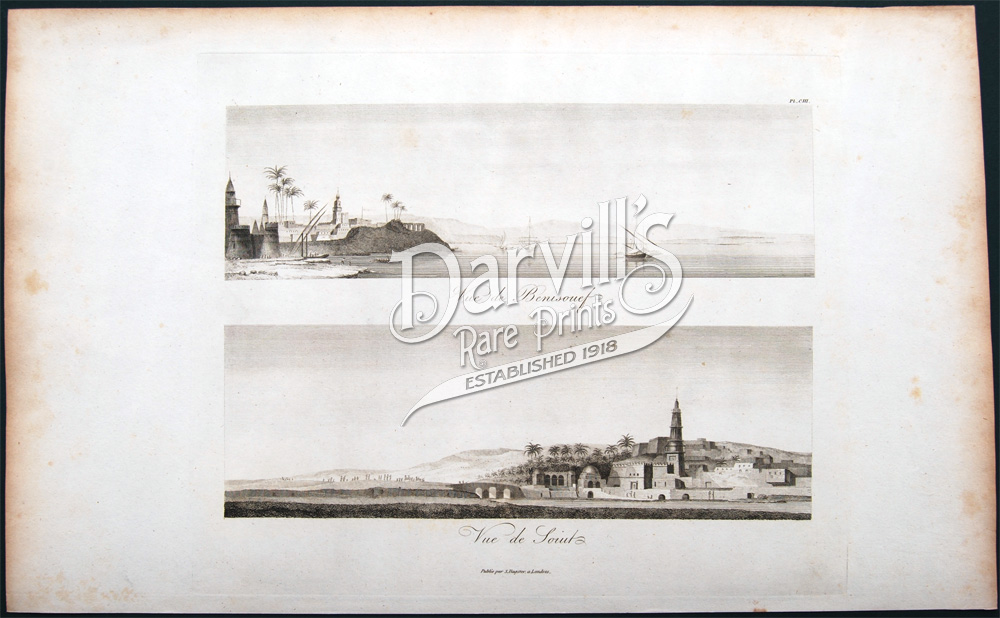 |
PLATE CIII |
Vue de Benisouef, Vue de Soiuf |
$150 |
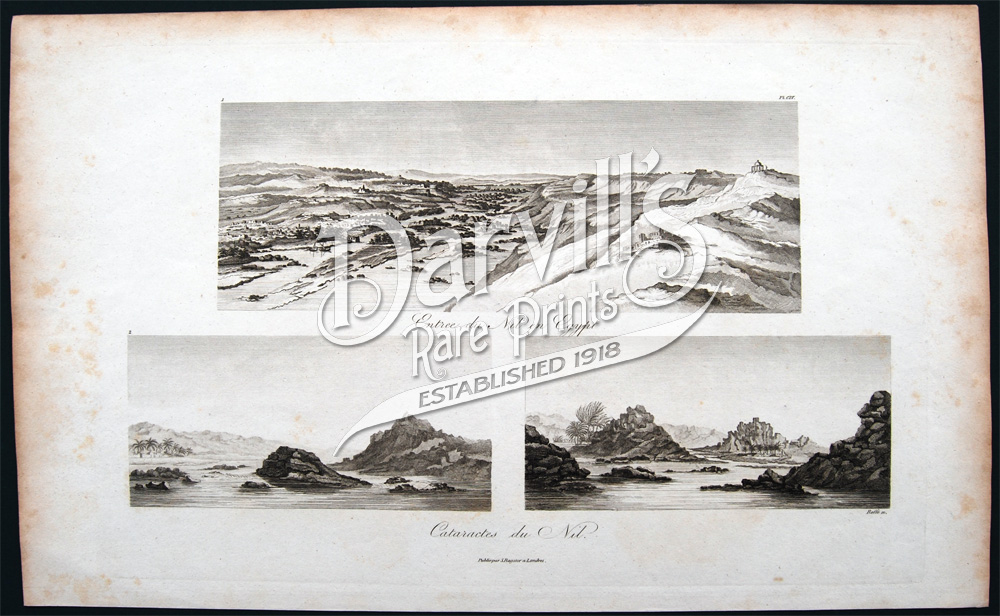 |
PLATE CIV |
Entree du Nil en Egypt
|
$175 |
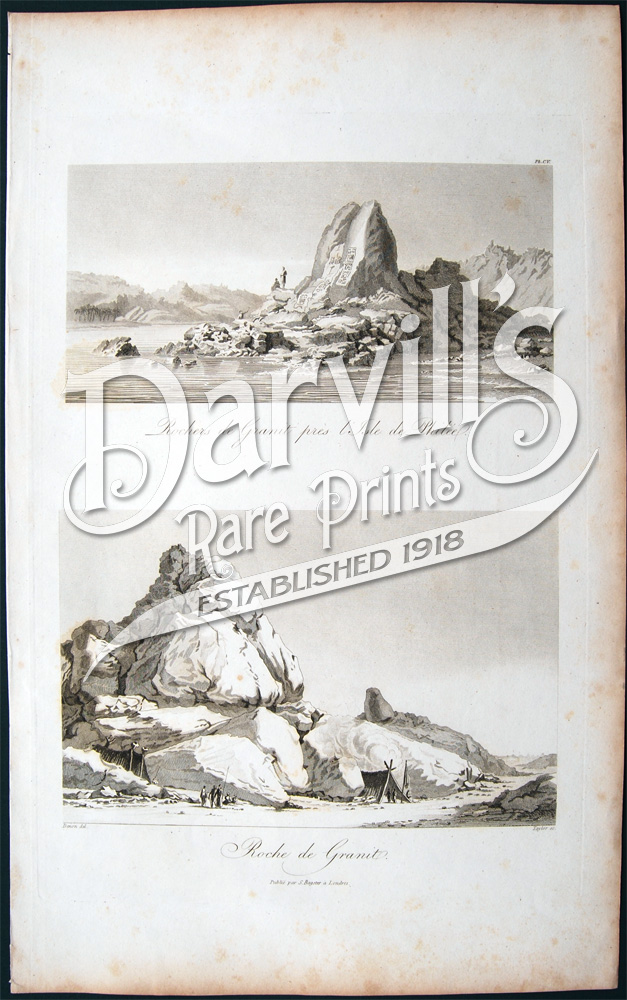 |
PLATE CV |
Rochers de Granit pres l'Isle de Philée, Roche de Granit |
$100 |
|
PLATE CVI |
Bloc de Granit, Carrieres de Granit, Rocheres de Granit |
$120 |
{double plate with center fold} |
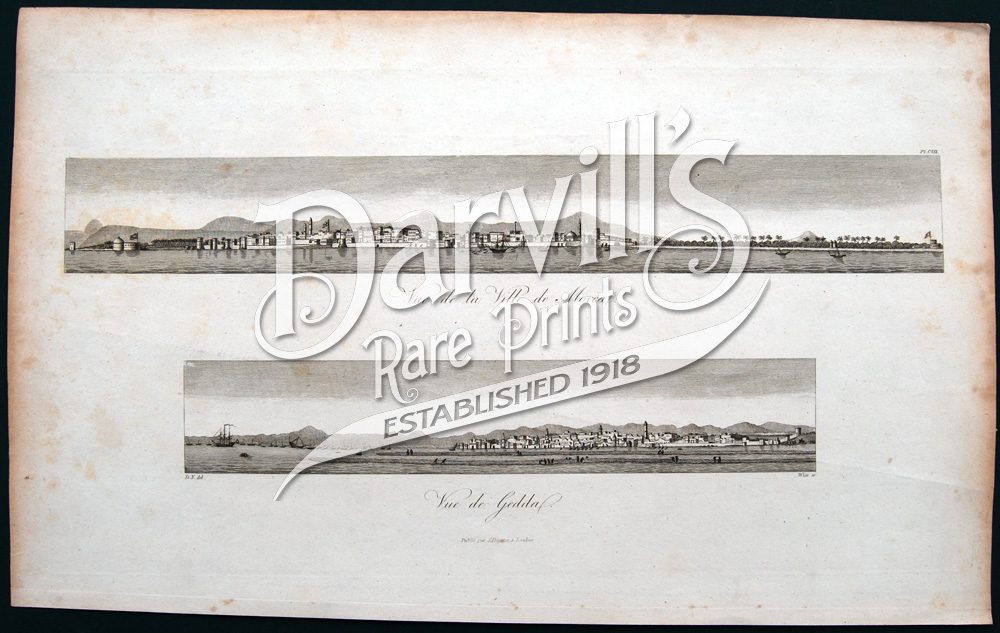 |
PLATE CVII |
Vue de la Ville de Mocca, Vue de Gedda |
$150 |
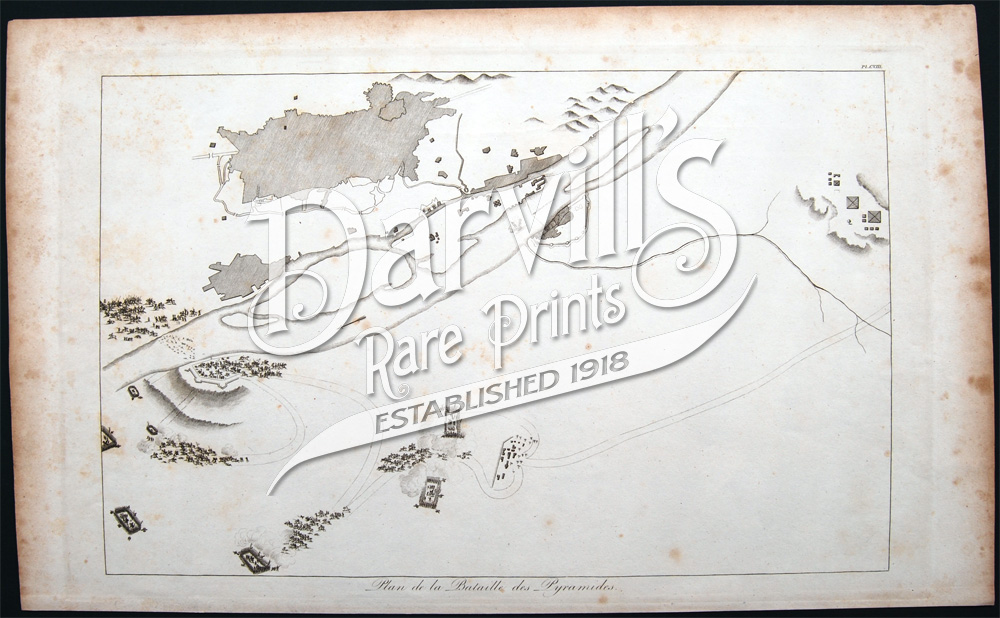 |
PLATE CVIII |
Plan de la Bataille des Pyramides |
$125 |
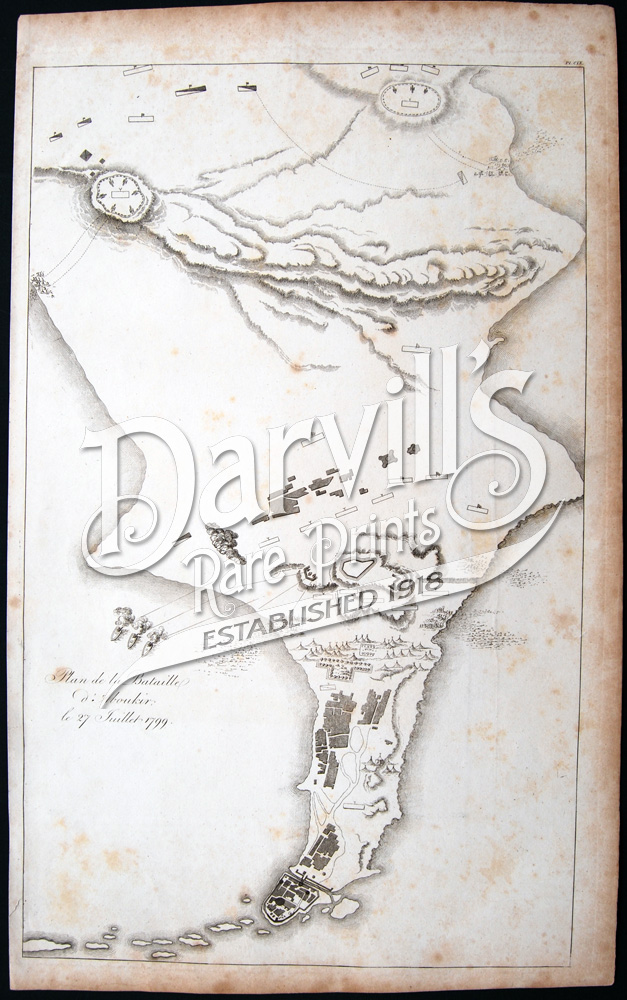 |
PLATE CIX |
Plan de la Bataille d'Aboukir
|
$125 |