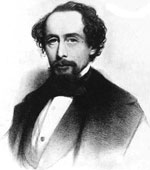
Charles Dickens
(in 1858, from a black and white drawing by Charles Baugniet)
Background:
Dickens worked in close collaboration with his illustrators, supplying them with an overall summary of the work at the outset for the cover illustration which was printed on heavy colored stock, usually green, which served as a wrapper for each of the monthly parts. Dickens briefed the illustrator on plans for each month's installment so that work on the two illustrations could begin before he wrote them.
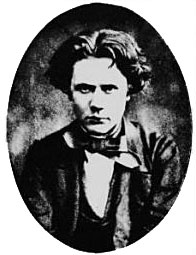
Marcus Stone
(artist unknown, 1856)
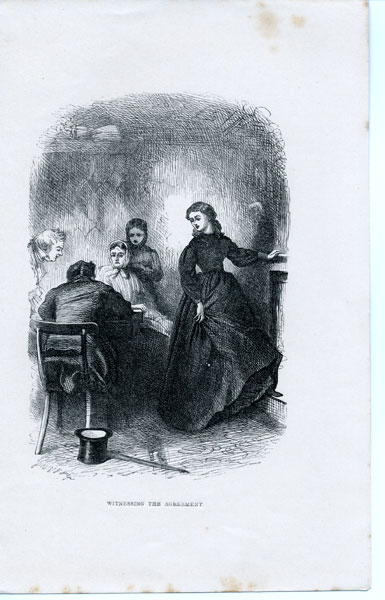
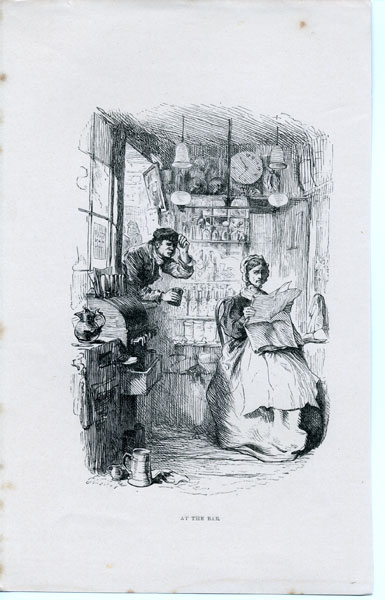
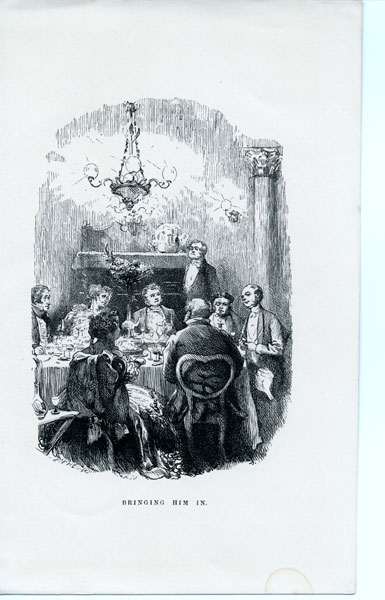
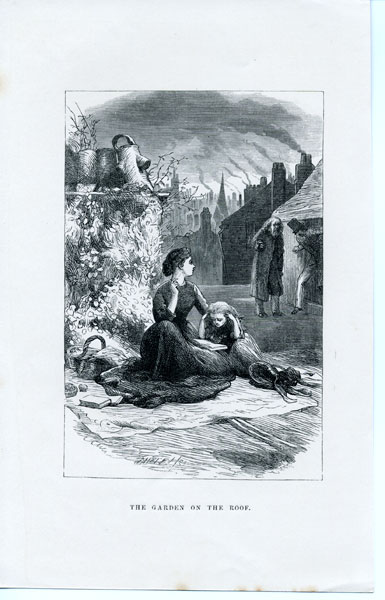
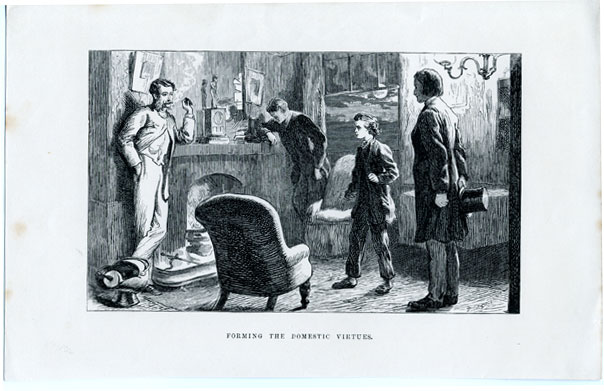
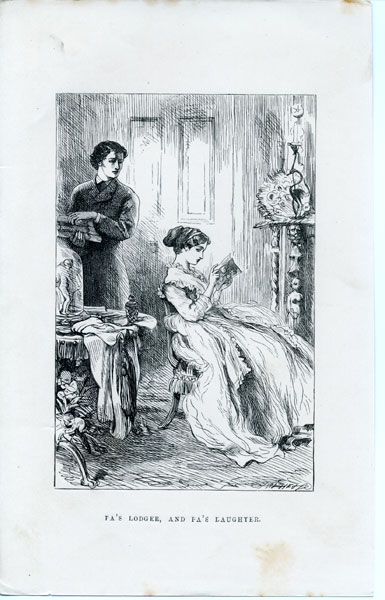
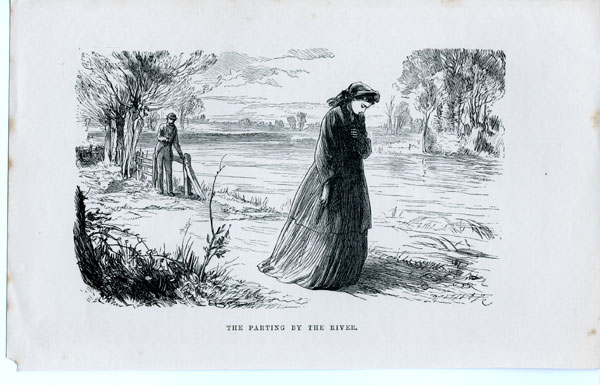
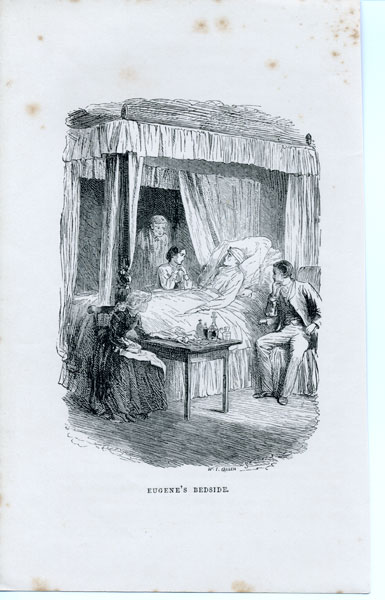
Marcus Stone was the son of Frank Stone, an established artist and long-time friend of Dickens. When Frank Stone died in 1859, leaving the 19-year-old Marcus to make his own way in the world, Dickens took a paternal interest in him and commissioned him to do work for his novels. Marcus Stone illustrated the Library Edition of Great Expectations for Chapman and Hall in 1862, and then went on to replace Phiz as the illustrator for Dickens's next monthly-number serial, Our Mutual Friend.
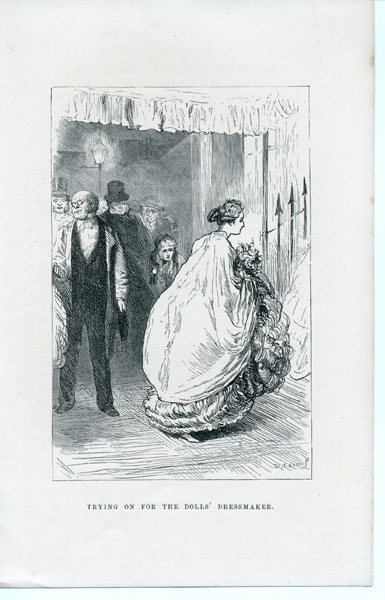
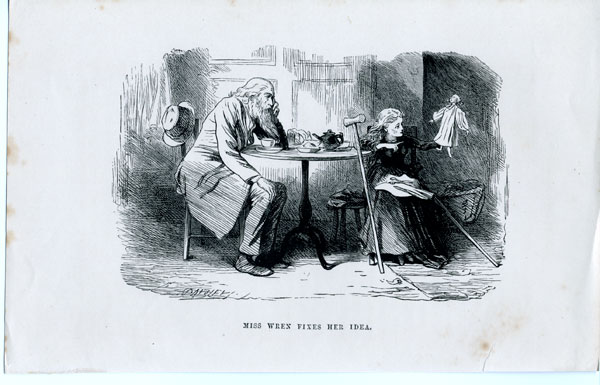
Stone's designs, as critic Harry Stone (no relation) has written, were submitted to Dickens for criticism. Dickens made suggestions covering everything from lettering, balance, and proportion, to gesture, physiognomy, and characterization. "The doll's dressmaker," Dickens wrote Marcus,"is immensely better than she was. I think she should now come extremely well. A weird sharpness not without beauty is the thing I want" (23 February 1864).
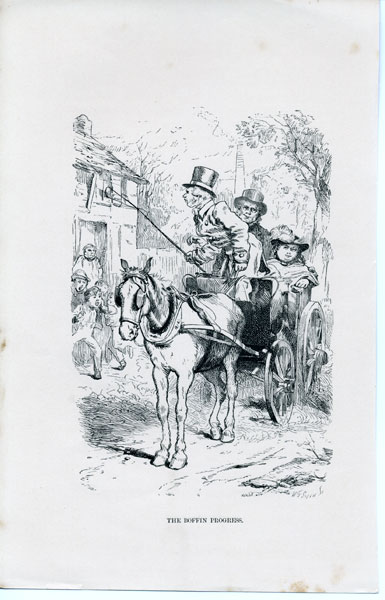
Stone's illustrations for Our Mutual Friend were printed from woodcuts—a departure from the usual steel engravings by Phiz. His novel illustrations (he also illustrated Trollope's He Knew He Was Right), have been widely looked upon as banal and uninspired, and indeed his illustrations for Our Mutual Friend have received harsh criticism since the first reviews appeared. (See the London Reviews.) A side-by-side comparison between Stone's dark, busy, and at times overbearing style, and Phiz's more delicate depictions will immediately demonstrate why. It is—unfortunately for Stone —Phiz's delightful and sunny Micawber who is engraved (literally) in the mind of the Dickens-lover, and not Stone's Boffin or Bird of Prey.
[Source: dickens.ucsc.edu.]
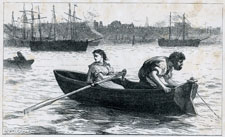
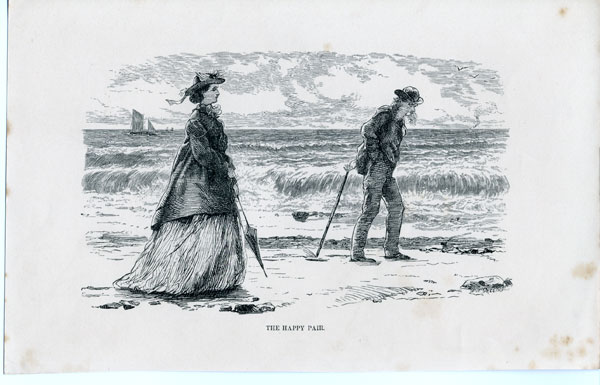
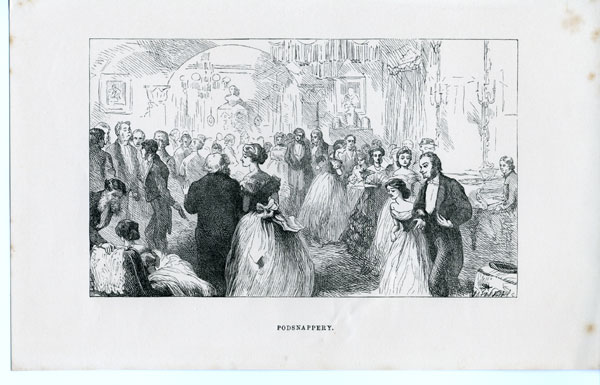
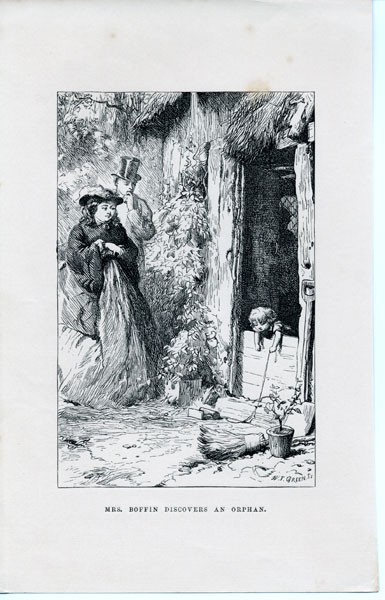
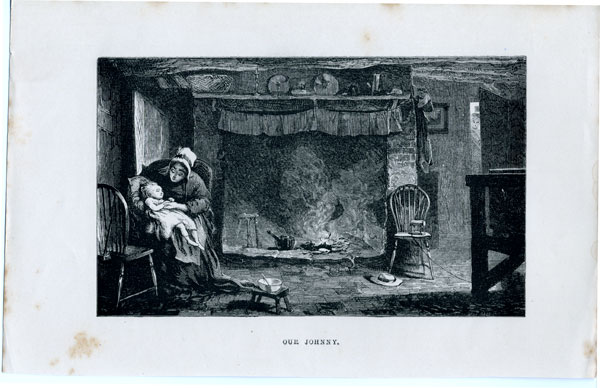
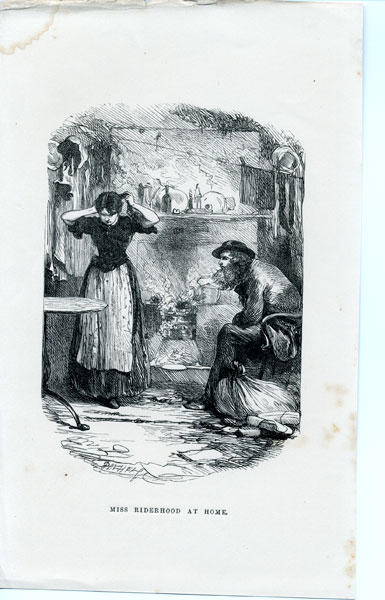
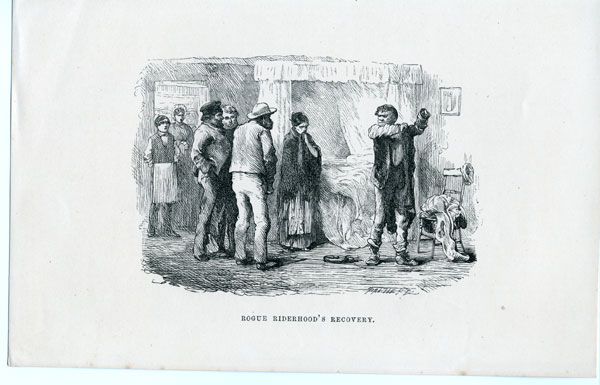
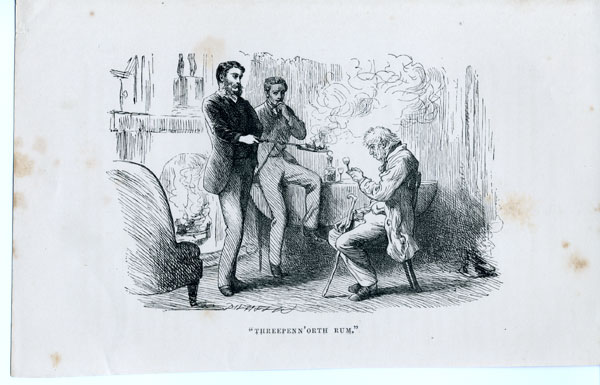
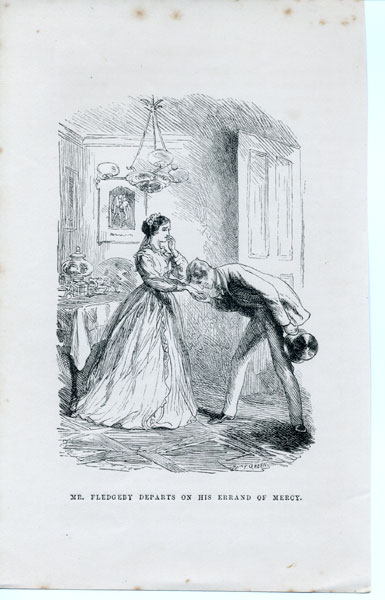
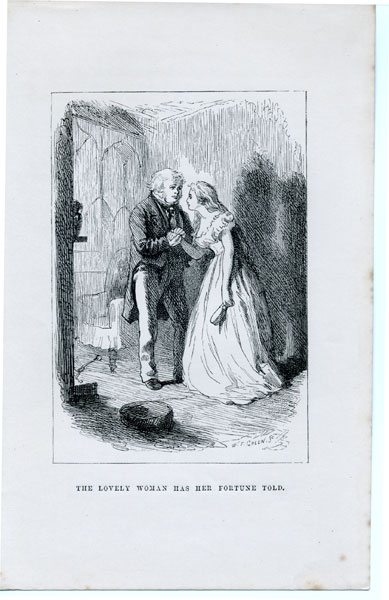
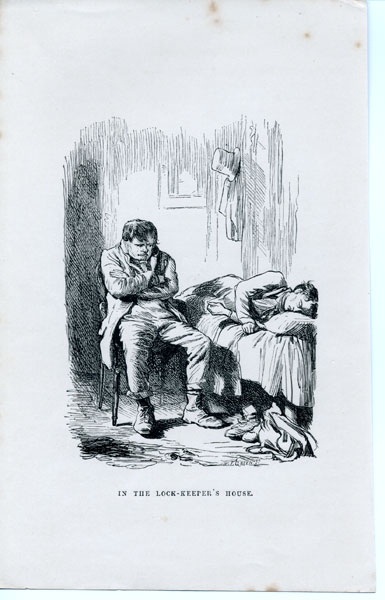
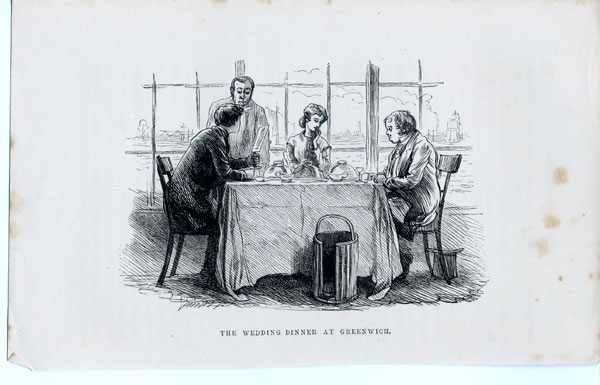
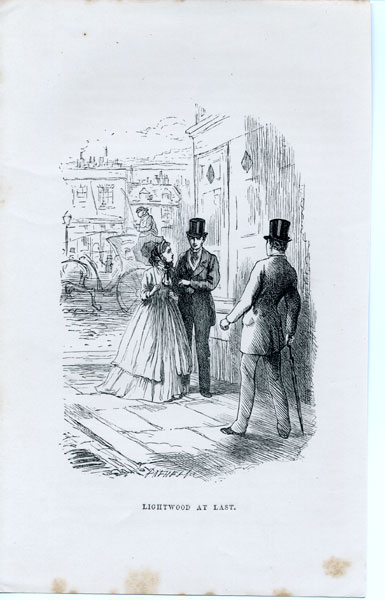
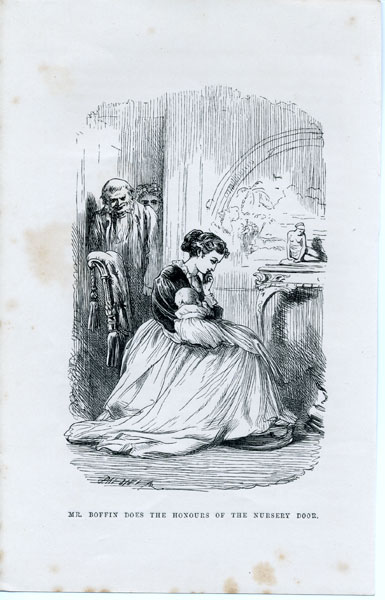
Darvill's Rare Prints is pleased to offer a huge selection of original Our Mutual Friend (written in the years 1864–65) is the last novel completed by Charles Dickens and is in many ways one of his most sophisticated works, combining deep psychological insight with rich social analysis. At one level it centers on, in the words of critic J. Hillis Miller, "money, money, money, and what money can make of life" (which is, incidentally, a quote from Our Mutual Friend, spoken by Bella at the end of book III, chapter iv.) but in a deeper sense it also about 'human values'. In the opening chapter, a young man is on his way to receive his inheritance, which, according to his father's will, he can claim only if he marries Bella Wilfer, a beautiful, mercenary girl whom he has never met. However, before he can arrive, a body is found in the Thames and identified as him. The money passes on, instead, to the working-class Boffins, and the effects spread throughout various corners of London society. Marcus Stone was the son of Frank Stone, an established artist and long-time friend of Dickens. When Frank Stone died in 1859, leaving the 19-year-old Marcus to make his own way in the world, Dickens took a paternal interest in him and commissioned him to do work for his novels. Marcus Stone illustrated the Library Edition of Great Expectations for Chapman and Hall in 1862, and then went on to replace Phiz as the illustrator for Dickens's next monthly-number serial, Our Mutual Friend. [sources: wikipedia.com, dickens.ucsc.edu] These are original wood-engraved plates, executed by the Dalziel Brothers We have many more Dickens prints... |
|
|---|---|
|
|
|
|
|
|
|
|
|
|
|
|
|
|
|
|
|
|
|
|
|
|
|
|
|
|
|
|
|
|
|
|
|
|
| Many more illustrations from Dickens novels on the Humor and Satire page |
|