Since Adirondack Retro acquired Darvill's Rare Prints in August of 2022, we have been working tirelessly on our New State-Of-The Art Website. We are excited to announce that it is now up and running and that our massive inventory of Antique Prints and Rare Maps are being transferred over to the new site daily. In addition to the nearly 500,000 prints found on www.DarvillsRarePrints.com, Adirondack Retro offers an eclectic selection of Antique and Vintage Advertisements along with their Limited Edition Giclee Prints. During this transition, customers will still be able to shop and make purchases on www.DarvillsRarePrints.com.
Sign up for our Mailing List and receive our Adirondack Retro Newsletter. When you sign up, we will email you a coupon code for you to get 15% OFF your first order at AdirondackRetro.com.
Illustrations of the Botany and other branches of the Natural History
of the Himalayan Mountains, and of the Flora of Cashmere by J. Forbes Royle, Esq., F.L.S. & G.S., M.R.A.S. London, published by Parbury, Allen, and Co.
1833-35
Original 190-year-old hand-coloured natural-history plates, drawn on stone by Maxim Gauci and others,
coloured by John Clark[e] or Mr. Barclay, after Vishupersaud, Miss Drake, W. Saunders,
Luchmun Sing, J.T. Hart and others, printed by Graf & Soret.
Sheet size: approximately 10.5 x 14 inches on beautiful woven paper. Our photographs do no justice to these extremely rare plates!
First edition of this 'pioneering ecological study' (Rix) on the trees, shrubs and flowers of the Himalayan region of the Indian sub-continent, largely illustrated with delightful images after Vishnuperand: the greatest Indian botanical artist of his time.
Born in Cawnpore the son of an officer in the service of the East India Company, John Forbes Royle joined the medical staff of the Bengal Army in Calcutta in 1819 or 1820. Three years later, in 1823, he was able to combine his medical and military duties with his love of botany when he was appointed superintendant of the botanical garden at Saharunpore. He carried out a thorough investigation of the properties of traditional plant-based Indian drugs, buying them in the bazaars, and in the present work (vol. I, pp. 239-240) he also recommends the establishment of cinchona (the basis for quinine) in India. He was one of the first to botanise in the Himalayas, and his position at Saharunpore allowed him to commission Vishnupersaud and others to produce an important and valuable collection of beautiful and highly accurate drawings of the specimens he found during his plant-hunting expeditions. The resulting collection also contained the first visual record of many species.
Please click on the thumbnails for an enlarged view of the entire plate.
We apologize for the poor quality of the photographs, which make the plates less attractive than they are 'in person.'
The prints appear better in real life, though there does tend to be some 'rumpling' in the margins along with some light smudges/soiling.
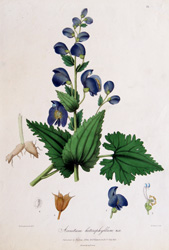
Plate 13
Aconitum heterophyllum
SOFT CREASE UPPER RIGHT CORNER, LIGHT SMUDGES IN OUTER MARGINS
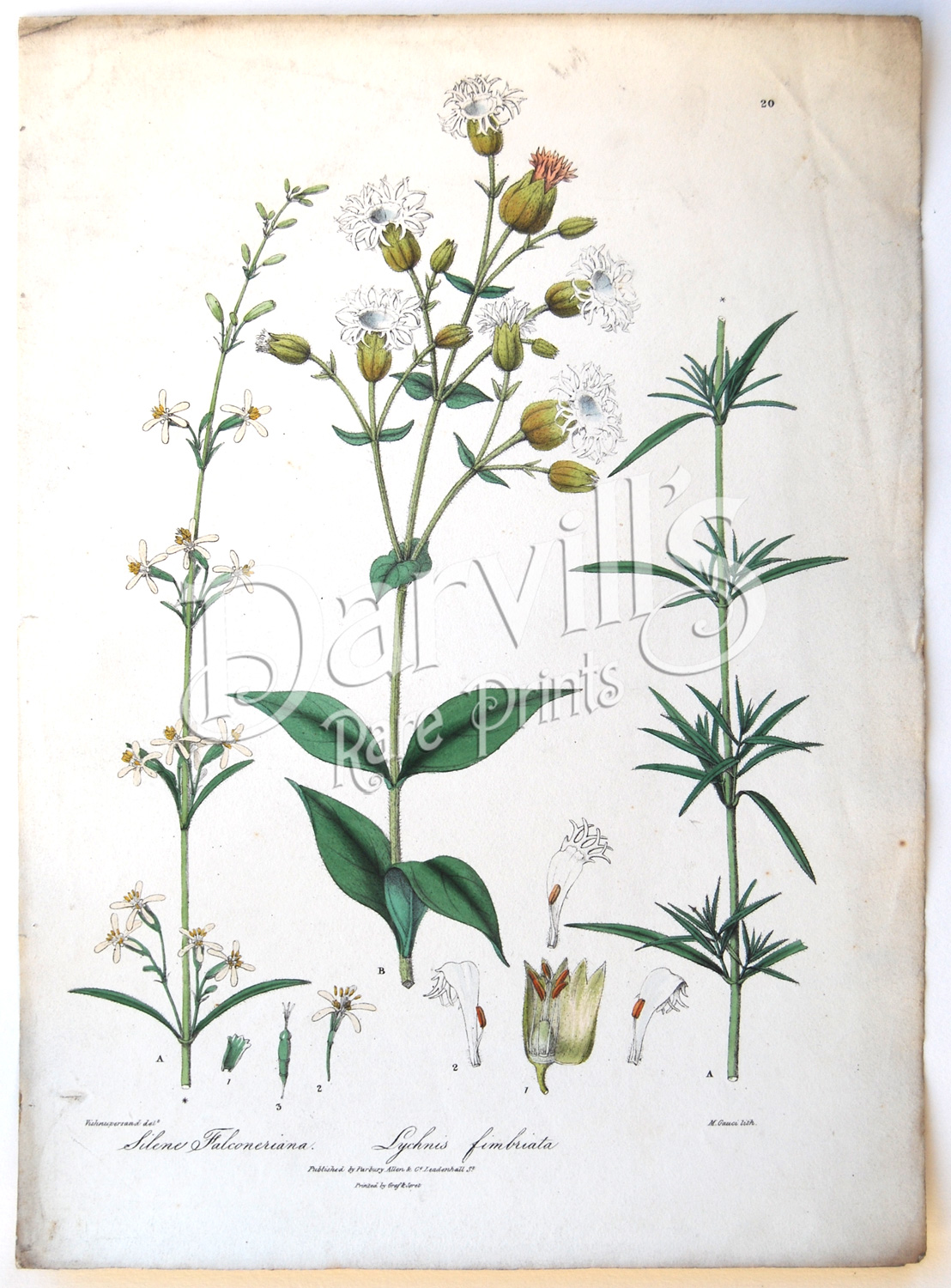
Plate 20
Silene Falconeriana
Lychnis fimbriata
SOFT CREASE UPPER RIGHT CORNER, LIGHT SMUDGES IN OUTER MARGINS
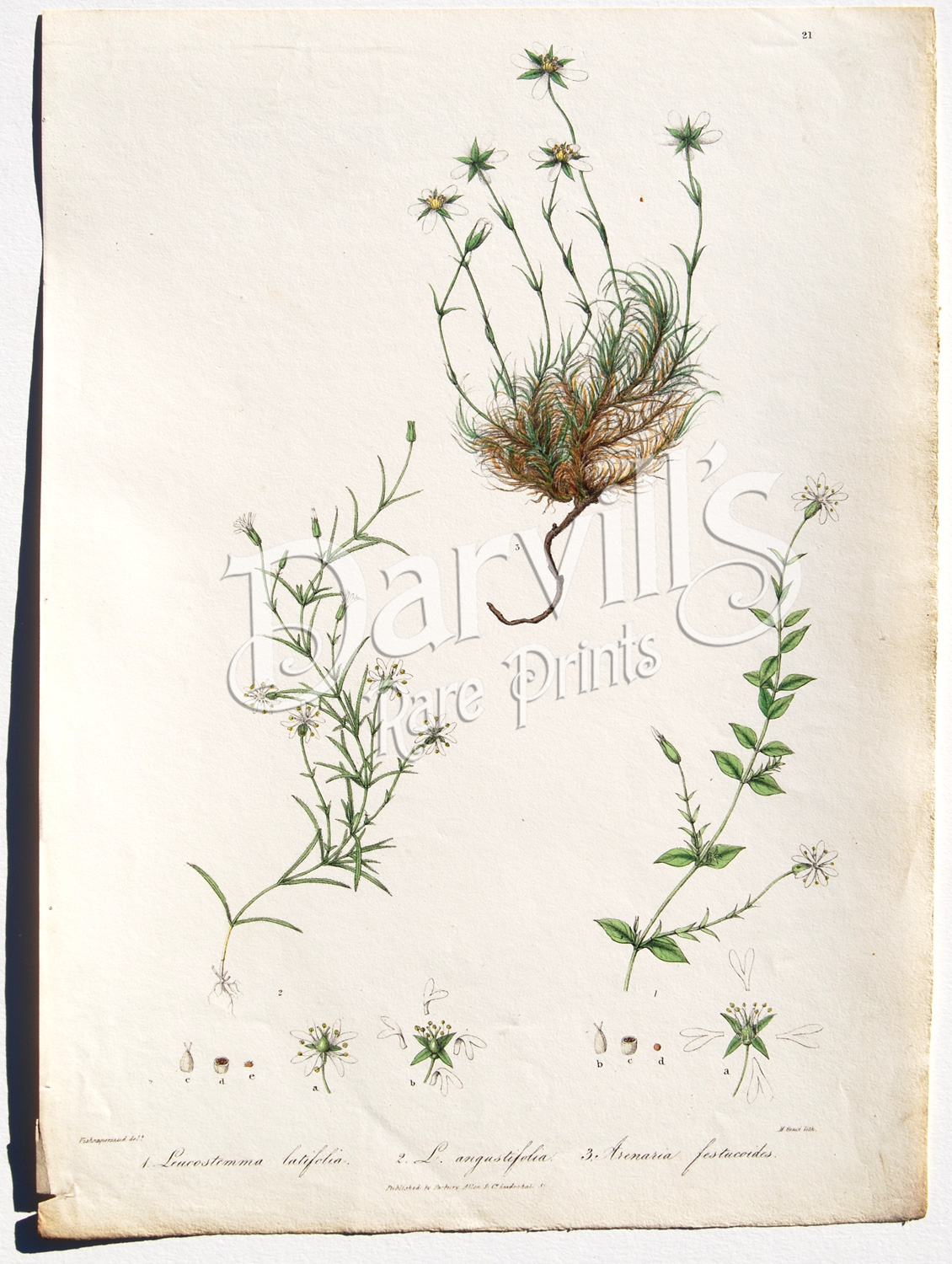
Plate 21
Leucostemma latifolia
L. angustifolia
Arenaria festucoides
LIGHT BROWNING AROUND EDGES OF PAPER, PER USUAL.
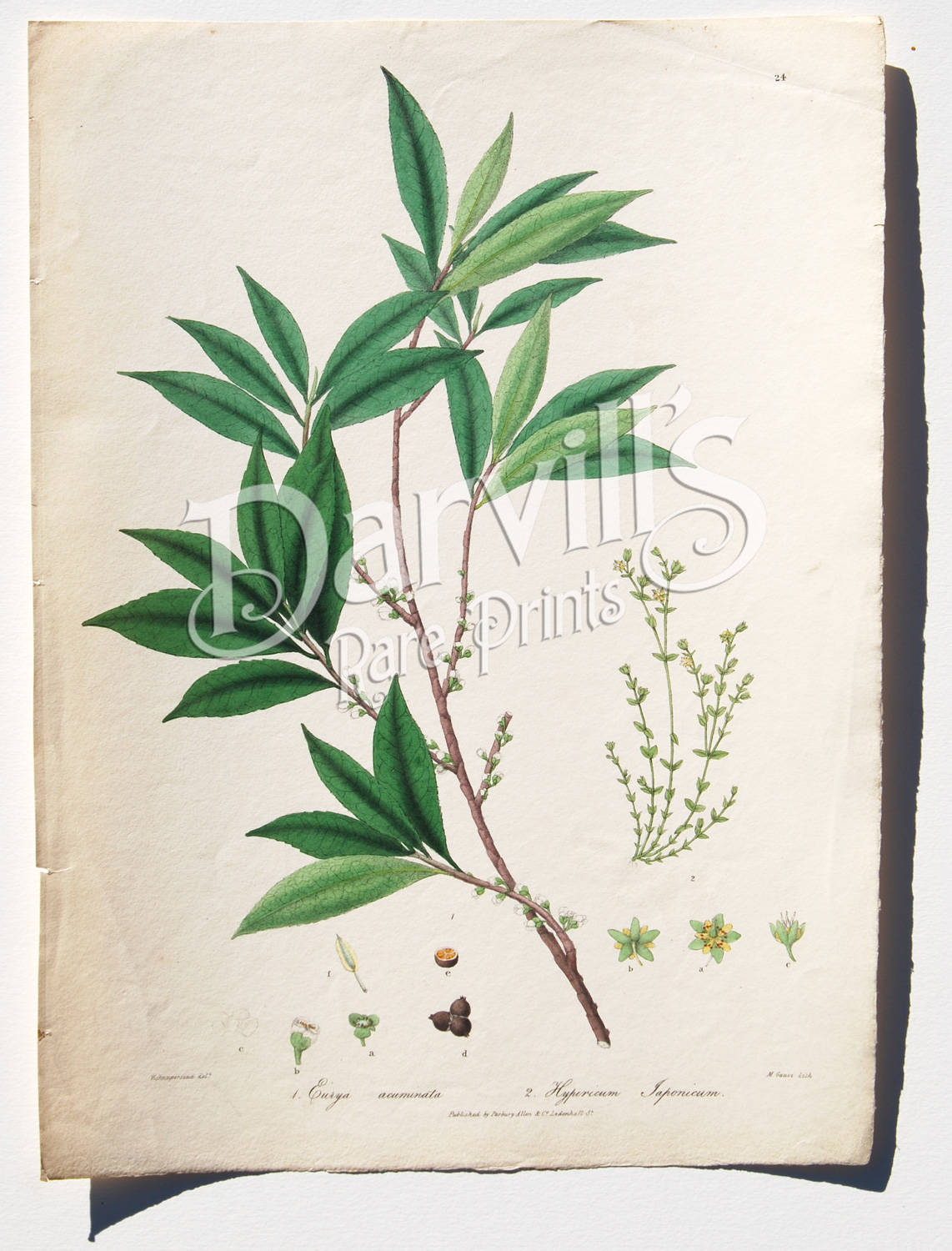
Plate 24
Eurya acuminata
Hypericum Japonicum
CREASE UPPER RIGHT CORNER, SOFT CREASE LOWER LEFT.
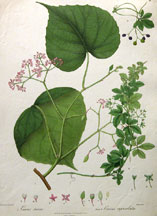
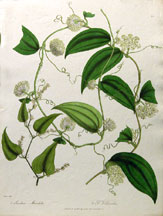
Plate 26
Cissus rosea
Cissus capreolata
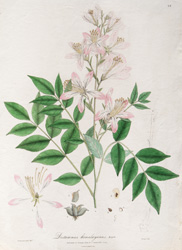
Plate 29
Dictamnus himalayanus
SOME LIGHT SOILING AND SLIGHTLY RUMPLED AROUND EDGES.
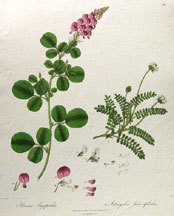
Plate 33
Uraria lagopoides
Astragalus leucocephalus
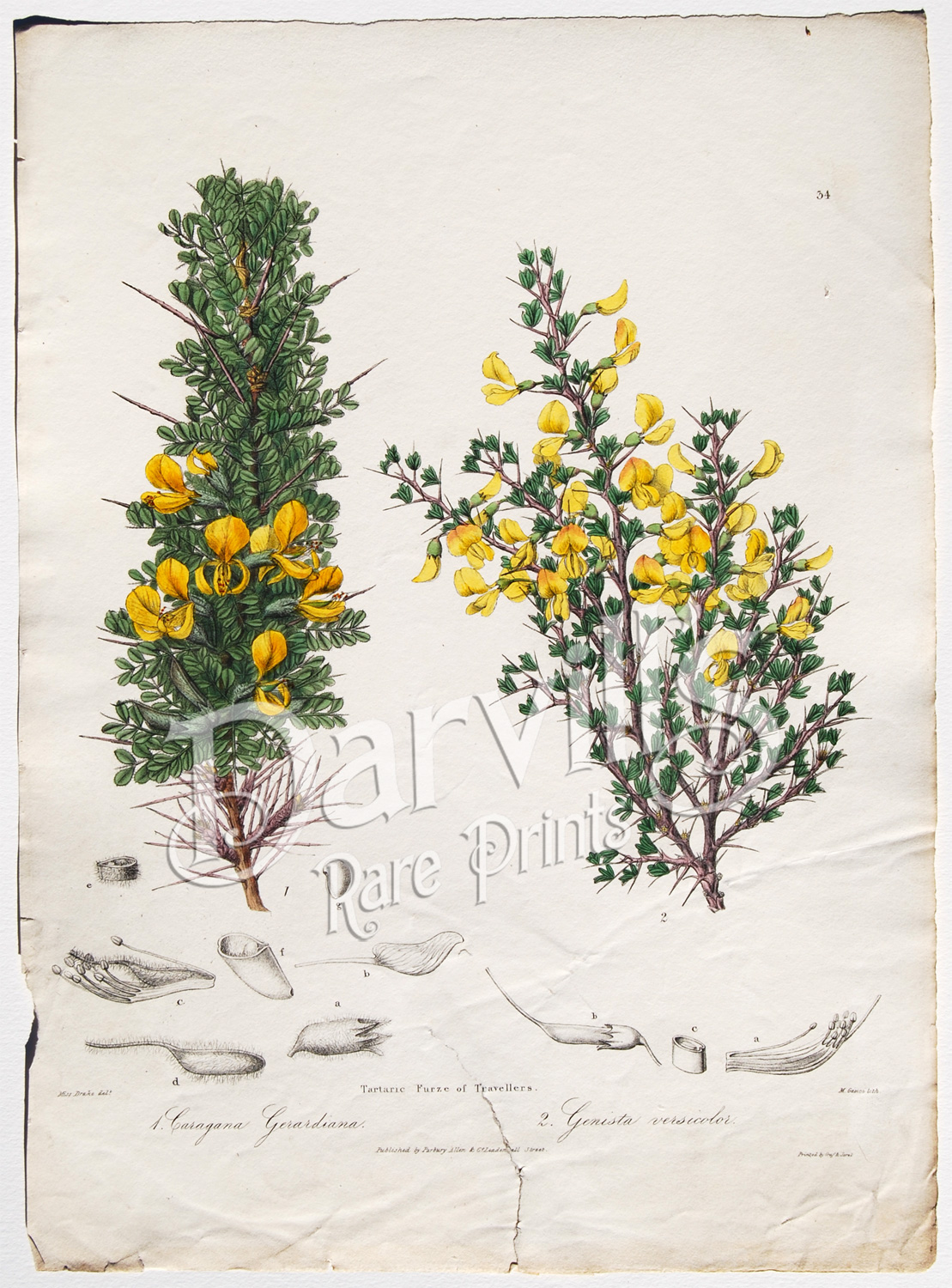
Plate 34
Caragana Gerardiana
Genista versicolor
POOR CONDITION: POORLY REPAIRED TEAR LOWER MARGIN EXTENDING INTO IMAGE (STICKY TAPE STILL ADHERED TO BACK OF PRINT); RUMPLING LOWER PORTION; CREASE UPPER RIGHT. PRICE REFLECTS CONDITION.
Plate 35
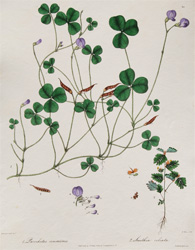
Parochetus communis
Smithia ciliata
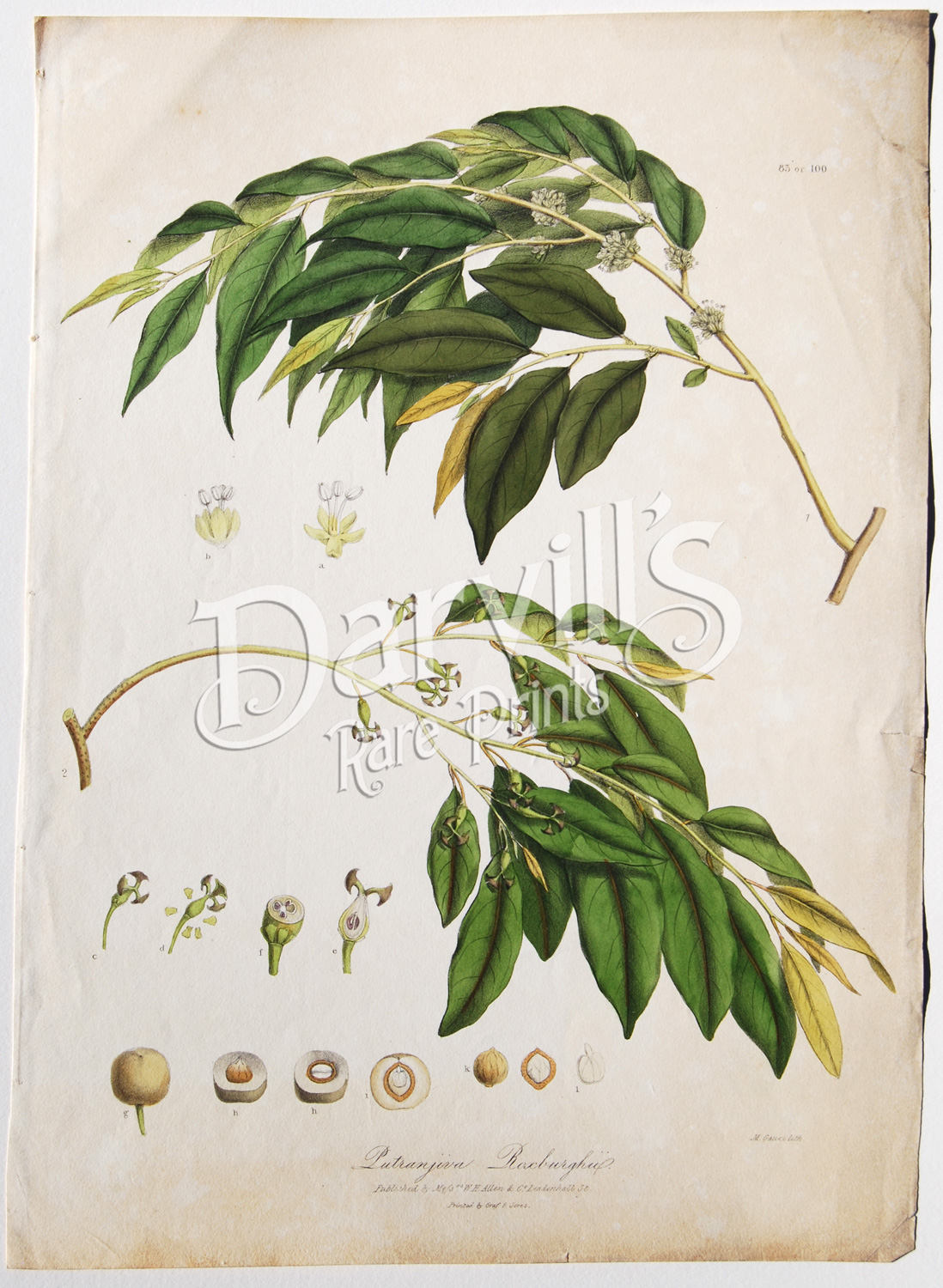
Plate 36
Aquilaria Agallocha
Astragalus Grahamianus
REPAIRED TEAR TO TOP EDGE, WELL OUTSIDE IMAGE AREA; SOME RUMPLING TO RIGHT MARGIN.
Plate 43
Circoea cordata
Epilobium laxum
A COUPLE OF SHORT REPAIRED TEARS AROUND EDGES AND MINOR EDGE/CORNER WEAR
Plate 74
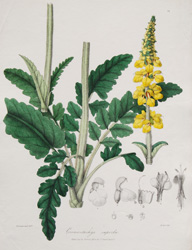
Eremostachys superba
EXCELLENT, WITH ONLY VERY FAINT CREASE UPPER LEFT CORNER
Plate 83
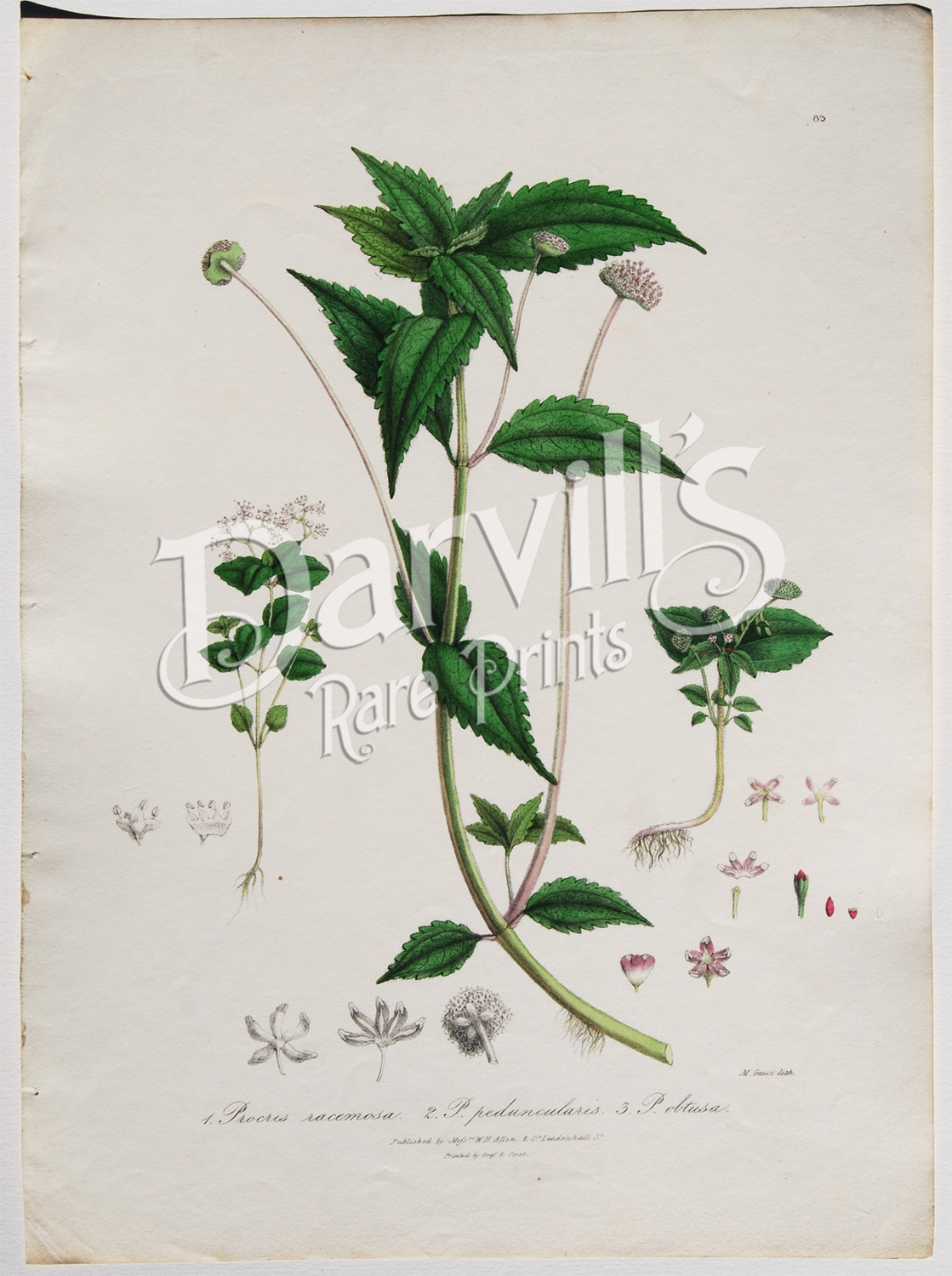
Procris racemosa
P. peduncularis
P. obtusa
EXCELLENT, WITH ONLY VERY MINOR EDGE RUMPLING
Plate 91
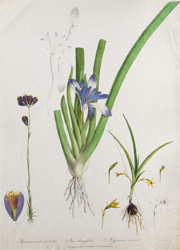
Burmannia coelestis
Iris longifolia
Hypoxis minor
SOFT CREASE UPPER LEFT CORNER; MINOR RUMPLING AROUND EDGES; NARROW TOP MARGIN (AS ISSUED); SHORT REPAIRED TEAR LOWER RIGHT MARGIN
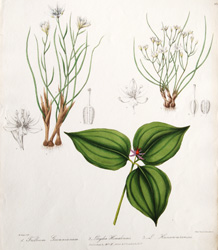
Plate 93
Trillium Govanianum
LLoydia Himalensis
L. Kunanvernsis
EXCELLENT, WITH ONLY VERY MINOR BROWNING AROUND EDGES